
Chapter 9 Preview — Motion Framework
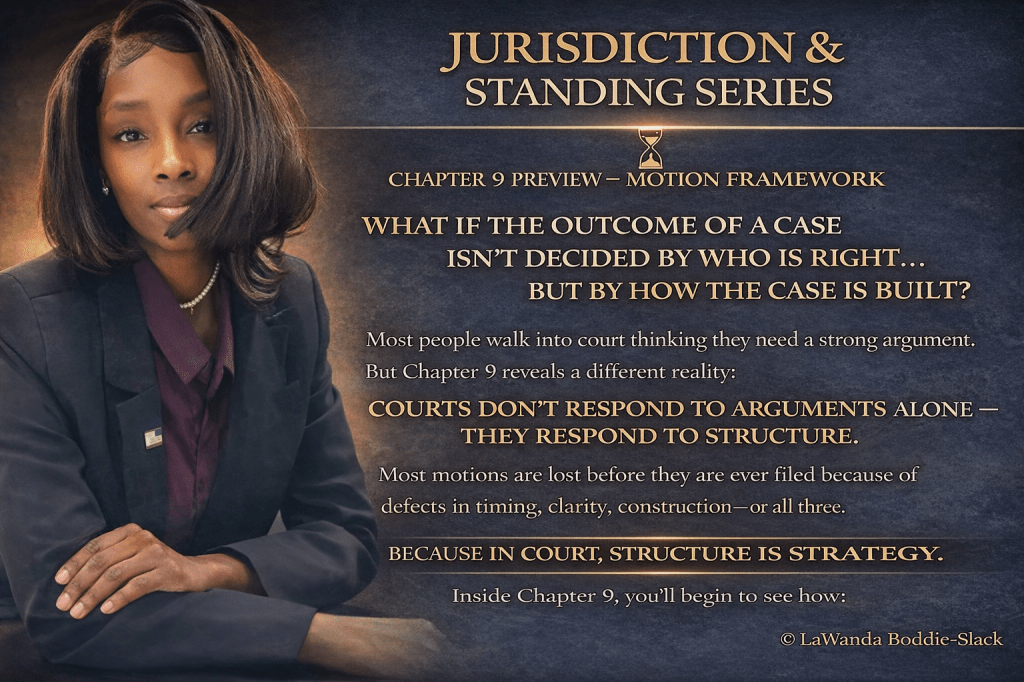
What if the outcome of a case isn’t decided by who is right…
but by how the case is built?
Most people walk into court thinking they need a strong argument.
But Chapter 9 reveals a different reality:
Courts don’t respond to arguments alone—they respond to structure.
A motion to dismiss is not just a document.
It is a system.
A system that forces the court to confront one critical question:
Does this case fail before it ever reaches the facts?
This chapter breaks down what most never see—how cases are quietly won or lost long before trial, through precision, clarity, and disciplined construction.
Because a poorly structured motion can bury a winning issue…
while a properly built one can end a case entirely.
Inside Chapter 9, you’ll begin to see how:
A single defect, properly framed, can dismantle an entire claim The right rule, paired with the right facts, changes everything Structure—not emotion—controls how the court decides
And most importantly:
Why timing, sequence, and presentation can determine whether your argument is heard… or ignored.
This is where strategy becomes execution.
This is where cases begin to collapse.
And this is where most people realize—
They were never taught how to build the motion that could have ended it all.
Chapter 10 Next Page


Leave a Reply