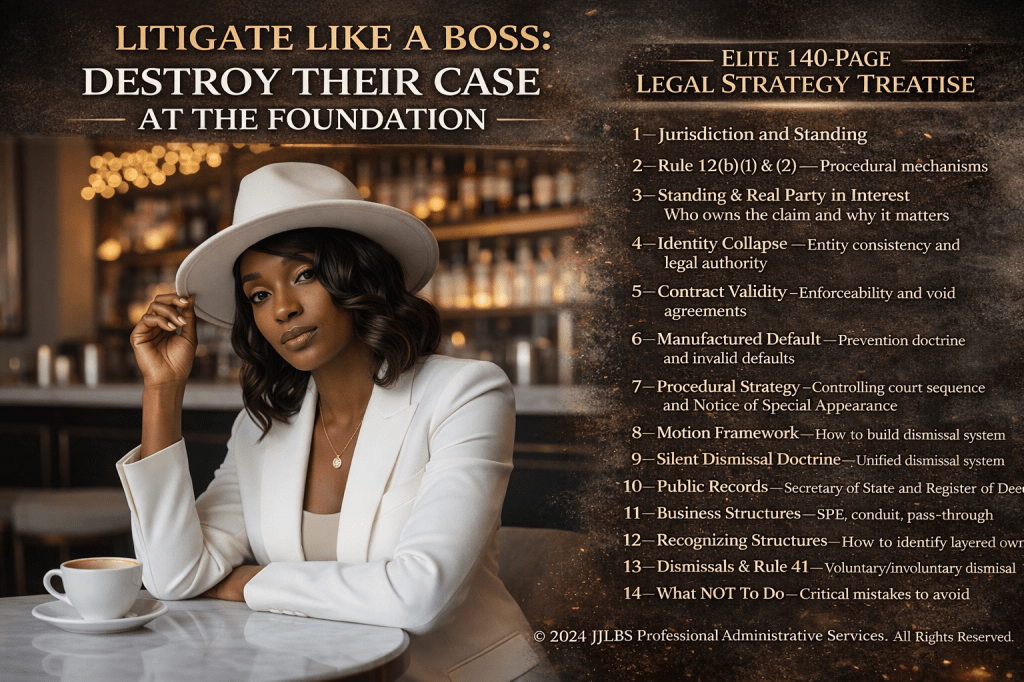
Chapter 8 Preview — Procedural Strategy
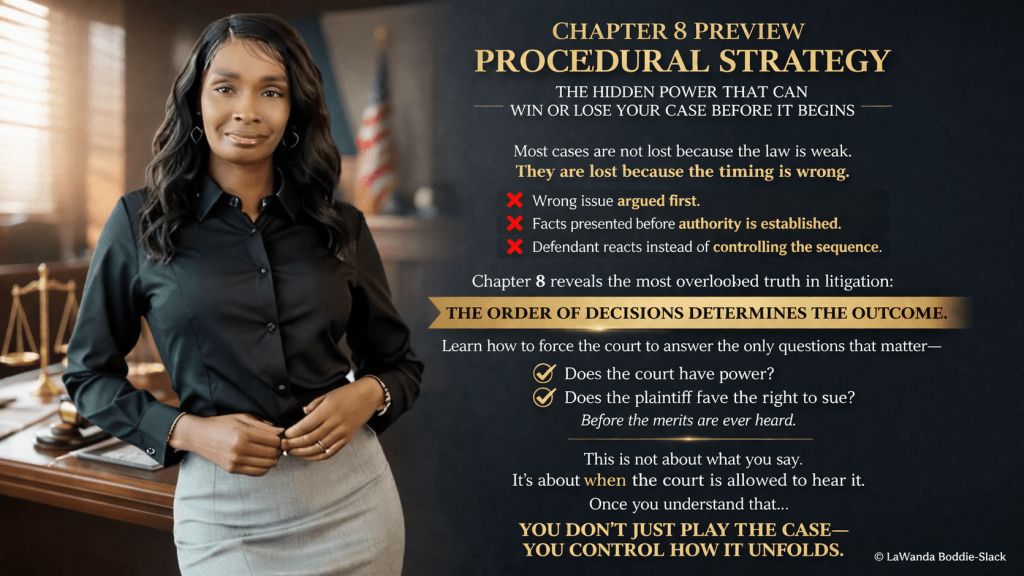
Most cases are not lost because the law is weak.
They are lost because the timing is wrong.
Because the wrong issue is argued first.
Because the court is allowed to move forward… before it should.
Chapter 8 exposes one of the most overlooked realities in litigation:
The order of decisions can determine the outcome of the case.
What happens when a court hears testimony before deciding jurisdiction?
What happens when facts are argued before authority is established?
What happens when a defendant reacts… instead of controlling the sequence?
That is where cases begin to slip.
This chapter introduces a powerful shift:
Stop reacting to the courtroom. Start structuring it.
Through strategic use of procedural tools, including special appearances and early objections, Chapter 8 shows how to force the court to answer the only questions that matter first:
Does the court have power? Does the plaintiff have the right to sue?
Only if those answers are yes… should anything else follow.
Because once the court moves into the merits,
the strongest arguments may already be lost.
This is not about what you say.
It is about when the court is allowed to hear it.
And once you understand that—
You are no longer just in the case.
You are controlling how the case unfolds.
Chapter 9 Next Page


Leave a Reply