
In American civic life, unresolved injustices have a way of resurfacing—not as relics of the past, but as living questions demanding present-day answers. Hartford, Connecticut now finds itself confronting one such question: What does justice look like when the statute of limitations has expired, but the harm has never healed?
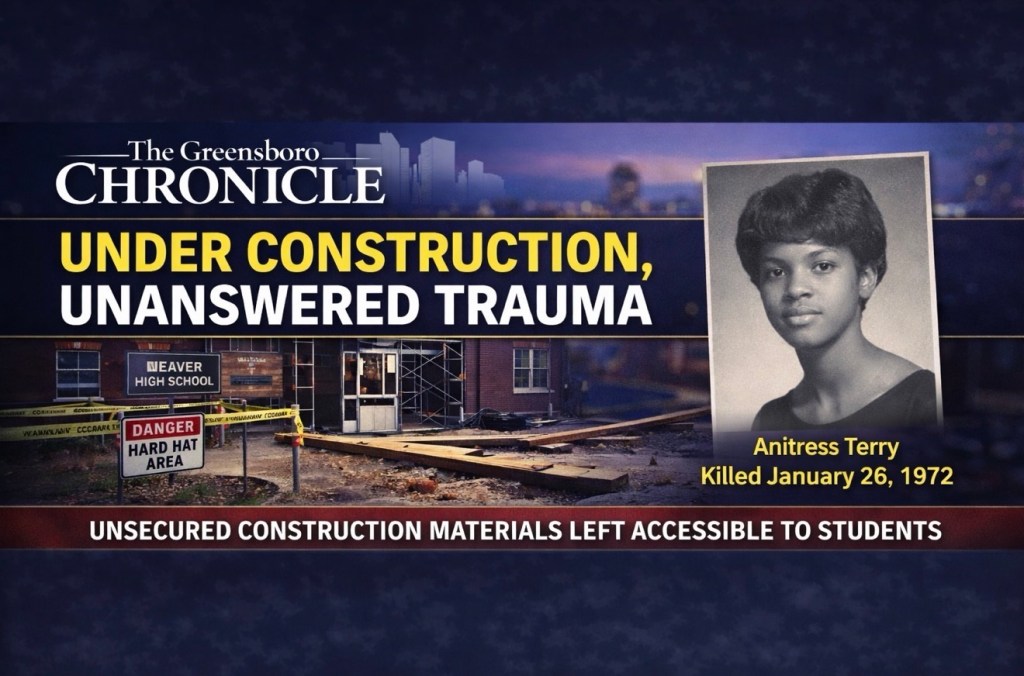
The death of Anitress Terry, a Weaver High School senior killed on January 26, 1972, was not the result of a natural disaster or unforeseeable accident. According to contemporaneous reporting and subsequent accounts, it occurred during an active construction project where unsecured materials were allowed to remain in areas accessible to students. A plank fell. A young life ended. And with it began decades of unaddressed trauma for a family—and, arguably, for a community.
What makes this case especially instructive is not only the tragedy itself, but the institutional silence that followed.
When Time Bars the Courtroom—but Not the Conscience
Connecticut law, like that of many states, imposes a two-year statute of limitations on wrongful death claims. From a purely procedural standpoint, the Terry family’s opportunity for civil litigation closed long ago. Yet the law also recognizes a distinction between legal liability and moral responsibility.
This is where the concept of historical reparations enters the discussion—not as a radical innovation, but as an established remedial framework used when conventional legal avenues are no longer available. Historically, reparations have been employed to address systemic or institutional harms that were lawful at the time, tolerated by authorities, or ignored due to social power imbalances.
The Terry family’s story raises an uncomfortable but necessary inquiry:
Was the absence of meaningful accountability in 1972 merely bureaucratic inertia—or was it shaped by race, neighborhood, and perceived expendability?

Institutional Neglect as a Pattern, Not an Anomaly
The document highlights that safety concerns at Weaver High School were known at the time. Board-level awareness, unsecured construction zones, and student access to hazardous areas were not speculative—they were documented. That context matters, because negligence is not defined solely by a single act, but by a failure to act when risks are known.
More troubling is the continuity of similar concerns in Hartford’s public schools decades later: unresolved infrastructure hazards, environmental health risks, and delayed accountability. While these later conditions are not legally linked to the Terry case, they underscore why unresolved history erodes public trust. When past harms are never acknowledged, present assurances ring hollow.
The Hidden Cost: Intergenerational Trauma
Legal discourse often focuses on damages that can be quantified. But trauma does not obey filing deadlines.
The Terry siblings reportedly lived with persistent fear, educational disruption, and the absence of mental health support in the years following their sister’s death. One child left behind—a two-month-old infant—grew up without her mother. These are not abstract harms; they are the lived consequences of institutional failure.
Modern courts increasingly recognize adverse childhood experiences and intergenerational trauma as real and measurable. Municipal governments, however, often lag behind the science—especially when the victims are families without political leverage.
What Guidance Can the City Offer—Now?
The call now before the City of Hartford Court of Common Council is not strictly legal. It is civic and ethical.
Possible avenues for redress do not require reopening a courtroom:
A formal public acknowledgment and apology grounded in historical findings A targeted reparative fund supporting educational or mental-health initiatives in the family’s name A policy review mandate tying past failures to present-day school safety reforms The commissioning of an independent historical report to establish an authoritative public record
Such actions do not rewrite history—but they do signal that history has been heard.
Why This Moment Matters
Communities often say they want to move forward. But forward movement requires orientation—and orientation requires reckoning.
Hartford’s choice is not between blame and silence. It is between engagement and erasure. The Terry family’s story reminds us that injustice does not expire simply because a calendar turns. When institutions fail to close the moral ledger, the debt accrues interest—paid in distrust, disengagement, and generational harm.
This is not merely a Hartford story. It is an American one.

Legal Disclaimer
This article is for informational and educational purposes only and does not constitute legal advice. No attorney-client relationship is formed by this publication. Readers should consult qualified legal counsel for advice regarding specific legal matters.
Copyright Notice
© 2026 The Greensboro Chronicle. All rights reserved.
No portion of this article may be reproduced, distributed, or transmitted in any form or by any means without prior written permission from the publisher, except for brief quotations used for commentary, scholarship, or news reporting with proper attribution
 Greensboro Chronicle
Leave a comment