**KEEP FROZEN, DON’T IGNORE:
Inside the Ready-to-Eat Chicken Recall That Reached North Carolina**
By The Greensboro Chronicle Investigations Desk
A Recall Hiding in Plain Sight
A product labeled “fully cooked” is supposed to be the safest thing in a freezer aisle. Ready-to-eat meals are marketed on trust—trust that the food has already cleared the most dangerous hurdle: contamination after cooking.
That trust is now under scrutiny.
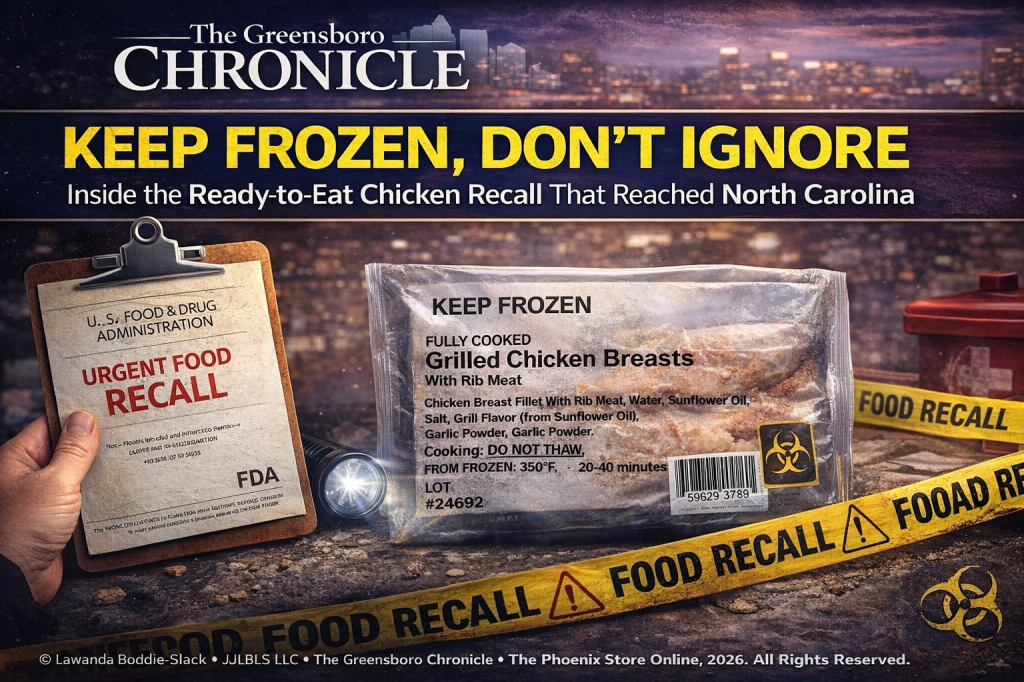
In recent weeks, nearly 14,000 pounds of ready-to-eat grilled chicken products produced by Suzanna’s Kitchen were recalled after federal inspectors identified a potential contamination risk linked to Listeria monocytogenes, a bacterium known to cause serious—and sometimes fatal—illness.
The recalled products were distributed across multiple states, including North Carolina, raising urgent questions for consumers who may already have the food sitting in their freezers, unaware that “fully cooked” does not always mean “fully safe.”
What Triggered the Recall
According to publicly released recall notices, the issue was identified through post-production review and regulatory oversight, not consumer complaints. That distinction matters.
Listeria contamination is especially dangerous because:
It can survive and grow in refrigerated and frozen environments It disproportionately affects pregnant people, older adults, and immunocompromised individuals Symptoms may not appear immediately, delaying diagnosis and treatment
The products at issue were ready-to-eat, meaning consumers were not expected to take additional food-safety steps beyond reheating—if reheating was required at all.
That classification significantly elevates the risk profile.
“Fully Cooked” vs. “Fully Safe”
The labeling visible on affected packages prominently states “fully cooked” and “keep frozen.” For many households, that combination signals low risk.
But food safety experts consistently warn that post-cook contamination—often occurring during packaging, handling, or storage—can render even properly cooked food hazardous.
Listeria is uniquely resilient. Freezing does not reliably kill it. Reheating instructions, if not followed precisely, may also fail to eliminate it.
In short:
A frozen, fully cooked product can still be dangerous.
Why Consumers May Never See the Recall
Unlike dramatic shelf pull-outs or store-level alerts, many food recalls rely on passive notification systems:
Press releases on federal websites Distributor notices Retailer postings that vary widely in visibility
There is no guarantee that a consumer who purchased the product weeks—or months—earlier will ever see the recall notice.
That reality places the burden squarely on the public to monitor recalls, often after the product has already been consumed.
What Consumers Are Being Told to Do
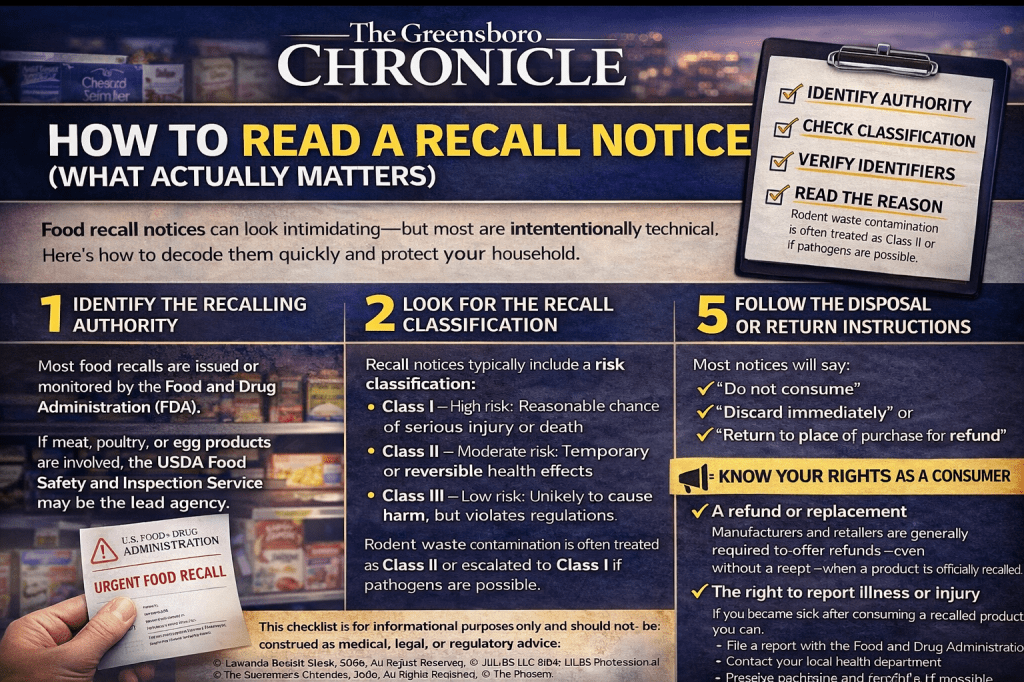
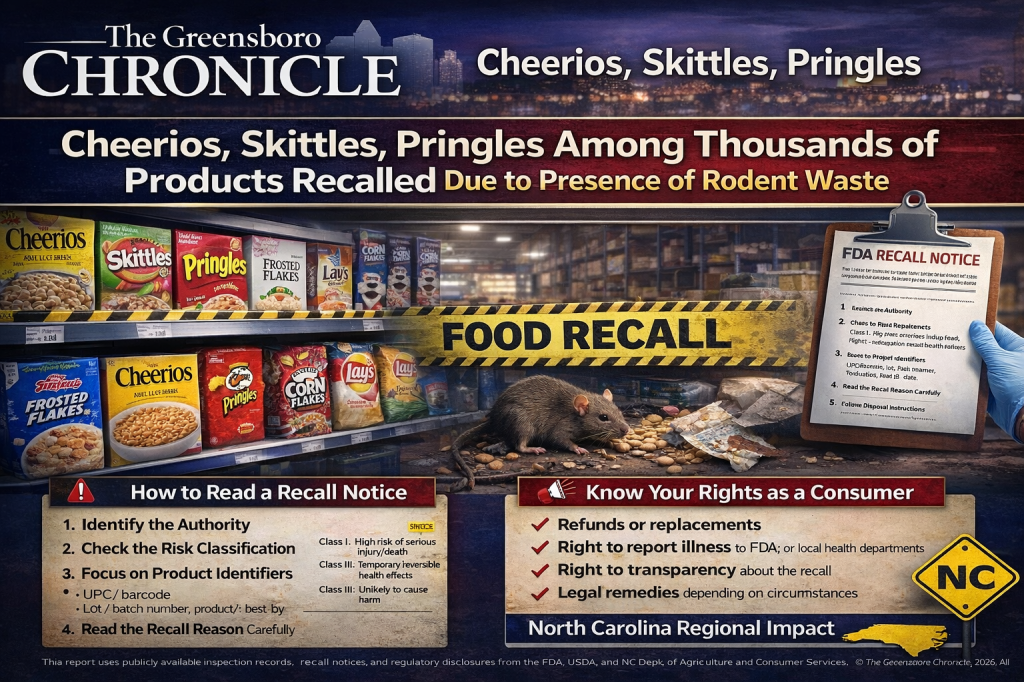
Official recall instructions generally include some version of the following:
Do not consume the product Discard immediately or Return to the place of purchase for a refund
Manufacturers and retailers are typically required to honor refunds or replacements even without a receipt when a product is officially recalled.
Consumers who believe they may have consumed a recalled product and experienced illness are advised to:
Seek medical care Preserve packaging if possible Report the incident to appropriate regulatory authorities
The Larger Pattern
Food recalls involving ready-to-eat meat products are not rare—but they are rarely front-page news.
What makes this recall notable is not only the volume of product involved, but the quiet way it entered public awareness, largely through social media posts rather than aggressive consumer alerts.
When recalls depend on chance discovery instead of direct notification, public health protection becomes inconsistent at best.
What This Investigation Cannot Yet Answer
As of publication:
No public findings of liability or wrongdoing have been issued No confirmed illnesses have been formally attributed in released materials Regulatory review and follow-up remain ongoing
Those facts may change.
And when they do, The Greensboro Chronicle will update its reporting accordingly.
What Consumers Should Take Away
“Fully cooked” is not a guarantee of safety Frozen foods can still carry serious pathogens Recalls are only effective if people actually see them Consumers have a right to refunds, replacements, and transparency
Food safety is not just a regulatory issue—it is a public trust issue.
Legal Disclaimer
The Greensboro Chronicle publishes investigative reporting based on publicly available records, regulatory notices, official statements, and firsthand accounts submitted by readers. References to individuals, businesses, or products are made for public-interest and informational purposes only and do not constitute findings of liability, negligence, or wrongdoing.
Allegations described are presented as such and remain subject to verification, response, and adjudication by appropriate legal or regulatory authorities. Information contained herein is not intended as medical, legal, or regulatory advice.
Copyright Notice
© Lawanda Boddie-Slack, 2026. All Rights Reserved.
© JJLBLS LLC d/b/a JJLBLS Professional Administrative Services, 2026. All Rights Reserved.
@Greensboro Chronicle, 2026. All Rights Reserved.


Leave a Reply