
For more than half a century, American audiences have been steeped in legal television. From the steady drumbeat of Law & Order to the gritty realism of The Wire, courtroom and police procedurals have become cultural comfort food.
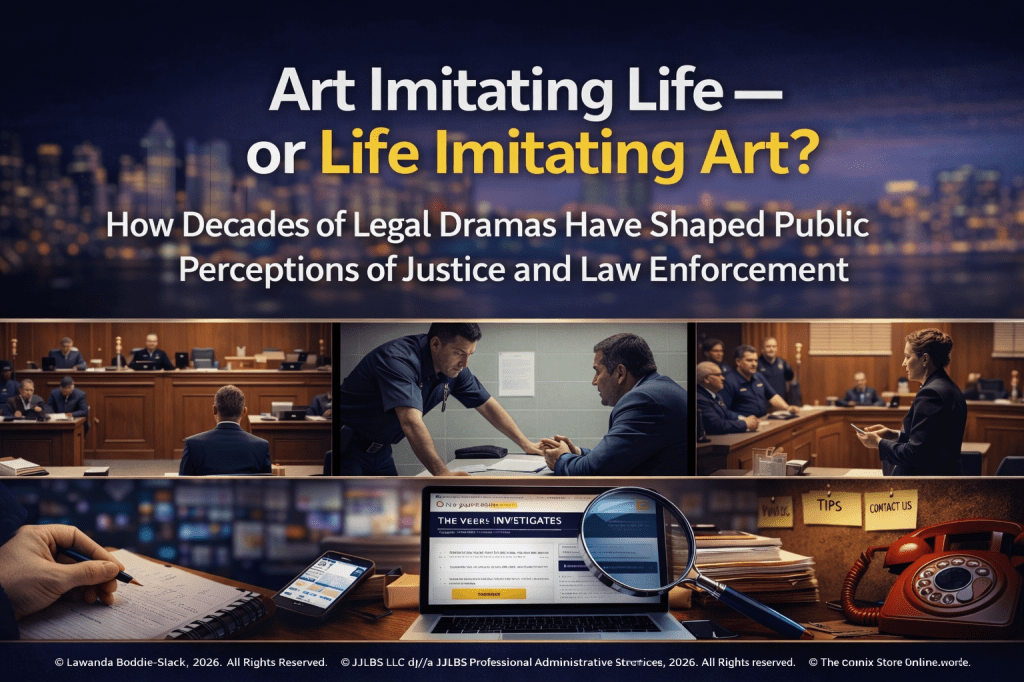
We watch them to relax, to be entertained, to feel reassured that “the system works.” But quietly—and powerfully—these narratives have shaped how we understand justice, policing, prosecution, and guilt. The troubling question is not whether these shows reflect reality. It’s whether they have trained us to accept realities we should be challenging.
Television law has rules—unspoken but consistent. The suspect is usually guilty. The shortcut is justified. The constitutional violation is unfortunate but necessary. Evidence obtained through questionable means is framed as heroic persistence. Prosecutors are depicted as moral crusaders. Judges are often passive referees. Defense attorneys, when not incompetent, are portrayed as obstructive or morally suspect. Over time, these tropes do more than entertain; they normalize conduct that, in real courtrooms, is illegal, unethical, or unconstitutional.

This Normalization of Illegality
In real life, the Fourth, Fifth, Sixth, and Fourteenth Amendments are supposed to be bright lines—protections against unlawful searches, coerced confessions, denial of counsel, and unequal treatment. In television law, they are speed bumps.
Illegal searches become “technicalities.”
Coercive interrogations become “pressure.”
Brady violations become “mistakes.”
Selective prosecution becomes “discretion.”
The audience is conditioned to root for outcomes, not process. If the “bad guy” is convicted, the means fade into the background. This framing matters. Decades of research in media studies and criminal justice show that repeated exposure to these narratives increases public tolerance for aggressive policing and prosecutorial overreach—particularly when the targets are poor, marginalized, or already socially stigmatized.
Prosecutorial Power as Entertainment
Television prosecutors are rarely shown committing misconduct, and when they do, it is portrayed as an aberration. In reality, appellate courts across the United States have repeatedly documented patterns of prosecutorial misconduct: withholding exculpatory evidence, presenting misleading testimony, making improper arguments, and exploiting procedural advantages against unrepresented or under-resourced defendants.
Yet in popular culture, the district attorney’s office is the embodiment of justice. The imbalance of power between the state and the accused is rarely interrogated. Instead, viewers are taught to see prosecutorial discretion as benevolent judgment rather than as raw authority constrained only by ethical rules that are seldom enforced.
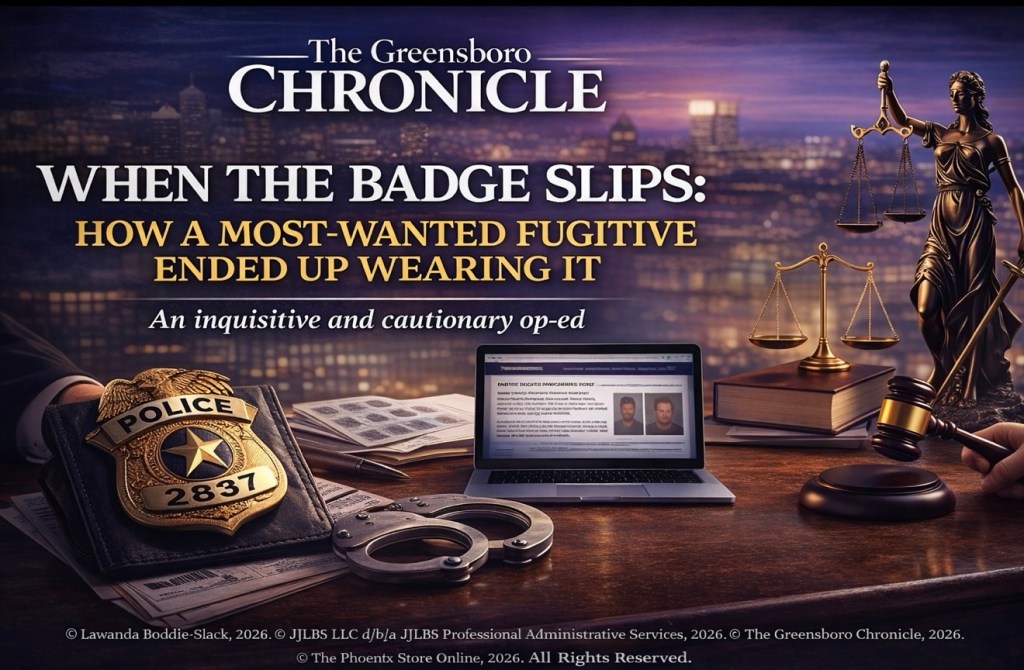
Law Enforcement as Protagonist, Not Institution
Police procedurals personalize law enforcement. The badge has a face, a family, a tragic backstory. Structural issues—racial profiling, unlawful stops, data manipulation, civil asset forfeiture, or retaliatory charging—are minimized or ignored. When abuse is depicted, it is individualized: “a bad cop,” not a bad system.
This narrative framing has consequences. When real-world footage surfaces—illegal stops, excessive force, falsified reports—the public reaction often mirrors television logic: What did the suspect do? Why didn’t they comply? Don’t the ends matter? We are primed to excuse institutional failure because we’ve been trained to empathize with the institution’s agents, not its subjects.
Fiction vs. Reality: The Double Standard
Here’s the paradox: viewers who cheer fictional rights violations often express outrage when confronted with the same conduct in real life. Why? Because television divorces harm from consequence. The wrongfully searched suspect is still guilty. The coerced confession is still true. The innocent person rarely stays innocent by the end of the episode.
In reality, illegal tactics distort outcomes. They produce wrongful convictions. They entrench racial and economic disparities. They erode public trust. And unlike television, there is no guaranteed reversal in the final act.
The Cost of Cultural Conditioning
Our collective tolerance for misconduct does not emerge in a vacuum. It is cultivated. When jurors arrive in court, they bring expectations shaped by years of fictional precedent. When voters evaluate reform, they compare it against dramatized fears of chaos. When judges assess credibility, they do so in a cultural environment that has already cast law enforcement as the default truth-teller.
Art does not merely imitate life. Over time, life begins to imitate art—especially when art goes unchallenged.
Reclaiming Reality
Critical viewing matters. Education matters. So does refusing to confuse entertainment with evidence. Legal dramas can be compelling without being corrosive—but only if audiences recognize the difference between narrative convenience and constitutional necessity.
Justice is not supposed to be efficient. It is supposed to be fair. And fairness, unlike television, requires accountability, restraint, and the courage to question the stories we’ve been told for decades.

Legal Disclaimer
This article is published for educational and informational purposes only. It does not constitute legal advice, does not create an attorney-client relationship, and should not be relied upon as a substitute for advice from a licensed attorney. Legal standards and interpretations vary by jurisdiction and over time.
Copyright Notice
© 2026 The Greensboro Chronicle. All rights reserved.
No part of this publication may be reproduced, distributed, or transmitted in any form or by any means without the prior written permission of The Greensboro Chronicle, except for brief quotations used for commentary, criticism, or educational purposes consistent with fair use.
 Greensboro Chronicle
Leave a comment