
Greensboro Chronicle
Op-Ed | August 26, 2025
Justice at Last in Hampton Roads
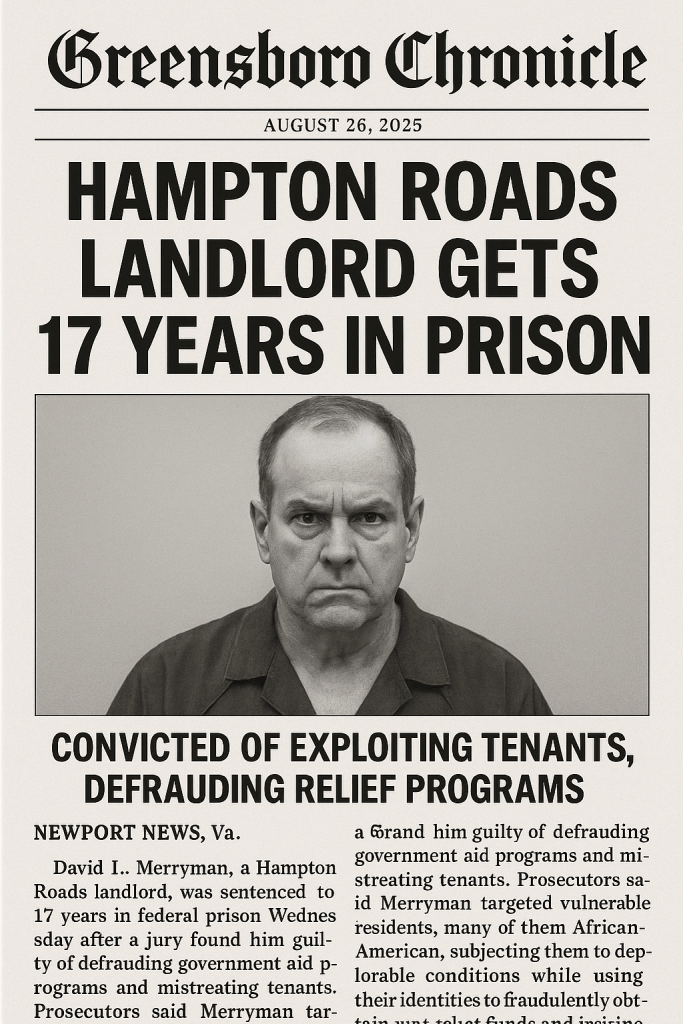
In a landmark verdict that reverberates far beyond the embattled homes of Newport News and Hampton, David L. Merryman, a landlord accused of exploiting vulnerable, primarily African‑American tenants, has been sentenced to 17 years in federal prison . This is no run‑of‑the‑mill judgment—it is a tonne‑heavy response to a pattern of racial exploitation, fraud, and human rights abuses, stretching from the onset of the pandemic to early 2024.
Merryman’s actions were brazen. He amassed dozens of rental properties—62 by some counts —in low‑income neighborhoods, specifically targeting tenants with limited housing alternatives. He then subjected these families to dilapidated conditions, rife with broken HVAC systems, rodent infestations, and structural disrepair, all while levying hefty upfront fees for uninhabitable homes .
Exploiting a Crisis for Profit
As the COVID‑19 pandemic raged, governments rolled out rent‑relief programs to cushion tenants and landlords from financial collapse. But Merryman turned that safety net into a weapon. He used stolen identities, forged tenant signatures, and false claims to siphon relief funds—then evicted the very tenants whose identities he had stolen .
His crimes compounded: wire fraud to capture government funds; aggravated identity theft for forging identities; and race‑based interference—moving beyond financial abuse into the territory of civil and human rights violations . By targeting people of color, Merryman weaponized both the system and his tenants’ vulnerability.
The Human Toll
For those caught in Merryman’s web, this wasn’t abstract wrongdoing—it was real, visceral justice. One former tenant, dubbed Samantha Feely, described him as “the slumlord from hell,” revealing that $20,000 in rent relief was fraudulently obtained in her name . Another, Heather Burchett, paid $1,500 a month for a dwelling with failing windows, mice, and broken HVAC units stained with duct tape—none of which were fixed .
These attractions were not just unsanitary or unfair—they were weaponized abuses. Sexual and racial slurs, death threats, even comments about slavery and “potting soil” toward tenants and their children—all delivered by a landlord who saw them as disposable . This isn’t just a story of property mismanagement; it is one of racial terror dressed as vigilante landlordism.
A Sentence That Speaks Volumes
On December 18, 2024, Merryman was sentenced in Newport News, with federal officials—U.S. Attorney Jessica Aber, FBI, HUD Inspector General—all condemning his conduct as a gross abuse of power and trust . The 17-year sentence reflects the federal government’s commitment: housing rights are human rights, and racial exploitation—especially under the guise of crisis relief—will be met with the full weight of the law.
In an era where housing insecurity and racial inequity intersect all too often, this prosecution is significant. It signals that federal authorities won’t turn a blind eye at the intersection of race, poverty, and predation.
Broader Implications and the Road Ahead
But one sentencing alone doesn’t repair trust. Tenants need real, enforceable protections. Three lessons must be carved into policy from this case:
Accountability for Relief Programs: Ensure stronger oversight over rent-relief disbursement—especially cross-checking landlord claims against tenant records and requiring tenant tracking of funds directly. Stronger Tenant Protections: Expand legal aid for tenants in poor or unsafe housing conditions. Tenants shouldn’t shoulder repair costs, nor tolerate harassment or threats with impunity. Combatting Discriminatory Practices: Empower HUD, DOJ, and local authorities to proactively monitor landlords whose portfolios predominantly include marginalized tenants. Patterns of neglect or intimidation should trigger preventive scrutiny, not only post-factum enforcement.
A Moral Reckoning
At its core, the Merryman case is about more than fraud or eviction—it’s about the corrosive weaponization of power against those least able to fight back. It’s a morality tale dressed in federal indictment: when greed and prejudice converge, the weight of justice must be relentless.
Let this sentence stand not only as retribution, but as a beacon. The pillars upon which healthy communities stand—fair housing, racial equity, judicial integrity—must be reaffirmed at every turn. As the Greensboro Chronicle, we call on policymakers, advocates, and citizens alike to draw strength from this moment, and to build systems that protect, rather than prey on, the most vulnerable.
 Greensboro Chronicle