
Twenty Years After Isabel: Hampton Roads’ Hard Lesson—and the Work Still Ahead
An editorial on memory, resilience, and the next big water
By the Editorial Board
DECK: In September 2003, Hurricane Isabel shoved the Chesapeake into our streets, darkened nearly every neighborhood, and taught Hampton Roads a lesson in “compound risk”—wind plus water plus weak links. On its 20-year mark, what did we fix, what did we forget, and what must we do before the next storm tests us again?

I. The day the Bay came home
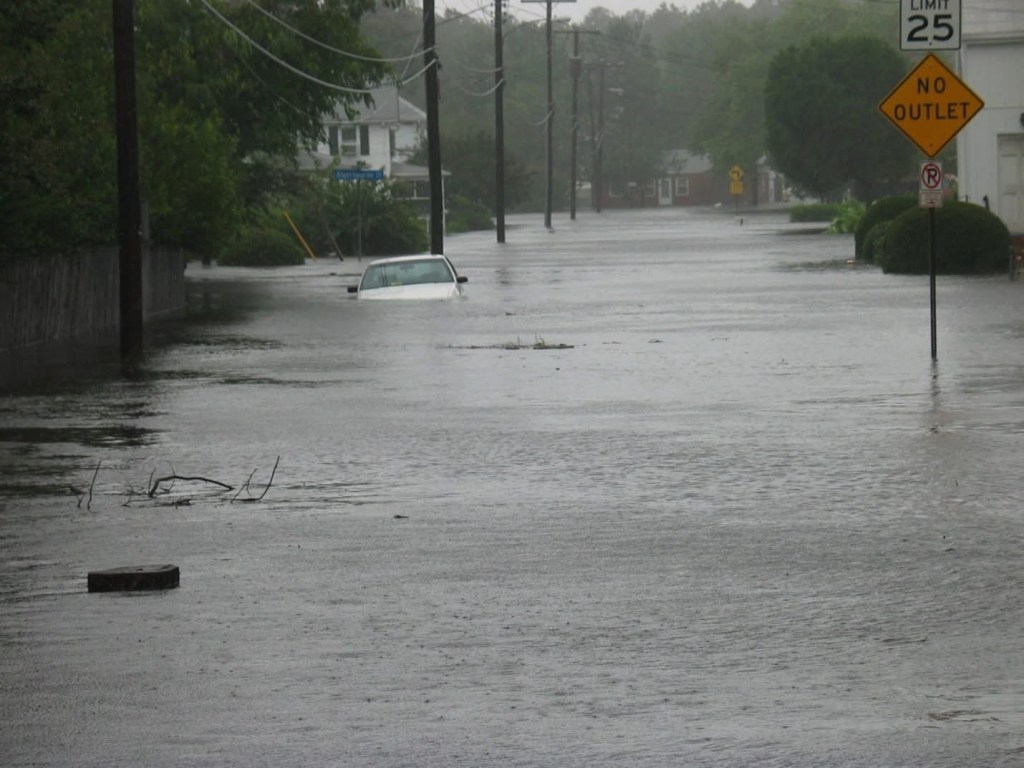
On September 18, 2003, Isabel came ashore as a large Category 2 storm and then marched up the estuaries that stitch Hampton Roads together. Its footprint was sprawling; hurricane-force winds covered the entire urbanized region as it crossed into Virginia. What we remember, though, is not a Saffir–Simpson number but the water: a storm surge that pushed southern Chesapeake Bay levels about 5–6 feet above normal and drove 8–10 feet above MLLW at certain peaks in the lower James and Elizabeth system—enough to erase familiar edges between river and road.
Wind damage was widespread, but Isabel’s power was in its size and duration—leaning on trees, snapping lines, rippling across neighborhoods from Ocean View to Colonial Place, from Port Norfolk to Phoebus, and across riverfronts in Poquoson, Hampton, and Newport News. Insured losses in Virginia were placed around $925 million, and statewide damage tallies have long lived between $1.6–$1.85 billion. National totals later settled around $5.37 billion. Behind those numbers were people: in Virginia, 10 direct and 22 indirect deaths were tied to the storm. We should still say their names.
“Isabel taught us that our problem isn’t just hurricanes. It’s where we live, how we build, and what we choose to ignore.”
II. When the lights went out
If the surge was a mirror, the blackout was a truth serum. Dominion’s system went down at historic scale: about 1.8–2.0 million customers across Virginia lost power, many for a week or more, as crews battled a regionwide tangle of downed trees and lines. That simple sentence—no power—translated into pharmacies shuttered, dialysis schedules scrambled, cold food tossed, elderly neighbors isolated, and small businesses pushed from “tight” to “closed.”
We learned that our electric lifeline is also our economic one. Isabel forced utilities and emergency managers to rethink mutual-aid surge staffing, vegetation management, and selective undergrounding on the worst-performing laterals. Some of that work got done. Some of it stalled each budget cycle. Storms, alas, don’t read budgets.

III. The failure we can’t forget: the Midtown Tunnel
No image captured Isabel’s local punch quite like what happened at the Midtown Tunnel between Norfolk and Portsmouth. As crews struggled to close the floodgate, 44 million gallons of Elizabeth River water poured in and flooded the tunnel in about 40 minutes, severing a vital artery and spiking risk for first responders and workers who barely escaped. Backups snarled through the already stressed Downtown Tunnel as the region learned—in real time—what a single chokepoint failure means in a water city. Subsequent projects hardened flood defenses and added capacity, but we should treat that disaster not as a one-off but as a systems diagram we must keep updating.
IV. The coastline we love—and keep risking
Isabel shredded beloved places. The original Harrison’s Fishing Pier in Ocean View was destroyed; its reborn successor stands today as both amenity and reminder. Docks and low-lying blocks took a beating from Norfolk to York County, and everywhere the water makes a right angle with asphalt, it jumped the curb. We have rebuilt most of what we lost—poles stronger, gates taller, dunes replenished, pumps added. But rebuilding is not the same as re-imagining.
A truth from our scientific neighbors at VIMS: Isabel’s “storm tide” rode in on the tide we had in 2003; the tide we have now is higher, and the tide we’ll have mid-century will be higher still. The same wind and barometer today achieve a bigger flood than Isabel did then. Risk is rising on autopilot. That should reorder our priorities.
V. What we fixed—and what we didn’t
We strengthened some infrastructure. Flood protections at transportation portals advanced; new gates, pumps, and protocols exist where they didn’t. Evacuation planning matured (Know Your Zone), and local emergency management exercises now stress inter-city coordination and communications redundancy. Utilities invested in grid hardening and targeted undergrounding. These are wins—partial, uneven, but real.
We still build into the bowl. Infill and redevelopment continue to chase waterfront views without always matching elevations, freeboard, or access routes to 21st-century water. Small projects pass muster individually; collectively they create neighborhoods that must be defended forever. That’s a bill we hand to future taxpayers—and to the uninsured.
We have plans on paper. They need money, timelines, and teeth. A seawall here, a living shoreline there—scattershot can’t solve a basin-wide hydraulic problem. Isabel taught us to think in systems: river + road + power + portal + people. Our capital plans must do the same.
VI. The equity question Isabel raised
Blackouts and floodlines map onto old lines—old trees in old neighborhoods, older housing stock, car-dependent households, ground-floor rentals in low-lying blocks. After Isabel, some families bounced back with savings and insurance; others lost jobs, food, medication, and months of stability. A resilience agenda that does not budget for backup power at dialysis centers, refrigeration at community clinics, and neighborhood-level cooling and charging hubs is not resilience for everyone. We cannot afford to repeat that moral error.
We don’t ‘return to normal’ if normal was the problem.”
VII. A to-do list before the next Isabel
1) Dry the chokepoints. Tunnels, underpasses, and low-lying bridges need flood protection equal to their consequence. Back-up pumps, independent power, watertight doors and portals—and regular live-fire tests—are the minimum. (Midtown taught us the price of ‘almost’.)
2) Hard-wire lifelines. Accelerate selective undergrounding on the most outage-prone laterals; diversify feeders to hospitals, shelters, and water/wastewater plants; and pre-stage mobile microgrids and battery trailers for clinics and senior housing. Track every improvement by a single metric: hours to restore.
3) Build to the water we’ll have. Adopt higher freeboard, floodable-first-floor designs, and living shoreline standards where they work—paired with buyouts or elevation where they don’t. Trust the science on sea-level rise; bake it into zoning and capital budgets, not press releases.
4) Protect people, not just property. Expand the map of essential sites with guaranteed backup: dialysis centers, pharmacies, public housing community rooms, and school-based shelters outside surge zones. Measure success in days safely at home.
5) Practice the hard day. Full-scale regional exercises that simulate tunnel closures, grid stress, hospital diversions, and neighborhood isolation will surface the next weak link—before the storm does.
VIII. Memory as infrastructure
At 20 years, the impulse is to remember and move on. We shouldn’t. Memory is a kind of infrastructure too: the stories we tell ourselves about what failed and what saved us. Ask the Midtown Tunnel workers who sprinted for their lives, or the Poquoson families who ripped wet flooring out by hand, or the Ocean View regulars who lost their pier and then watched a new one rise. These are not just anecdotes; they are specifications—directions for how to build a region that can take a punch and keep its people safe.
Isabel was a warning delivered in water. We have used parts of that warning well. We have also forgotten parts that were inconvenient. The next storm won’t care which is which. Our job, before the wind turns, is to make sure our choices do.
Sources & Notes
Official Tropical Cyclone Report (NHC): landfall intensity, surge heights in Hampton Roads, Virginia casualties (10 direct, 22 indirect), insured losses in VA (~$925 M), U.S. total revised to $5.37 B.
NWS Wakefield retrospective: Sewells Point peak ~7.9 ft MLLW (~5-ft surge), regional surge context.
Dominion outages and statewide impacts (historic scale; debris removal): reporting and testimony.
Midtown Tunnel flooding (44 M gallons) and subsequent hardening: contemporaneous federal brief and 20-year retrospective.
Ocean View/Harrison’s Fishing Pier loss and rebuilding: local coverage.
Long-term risk and sea-level rise context for Hampton Roads: VIMS analysis; Center for Climate & Security brief.
 Greensboro Chronicle