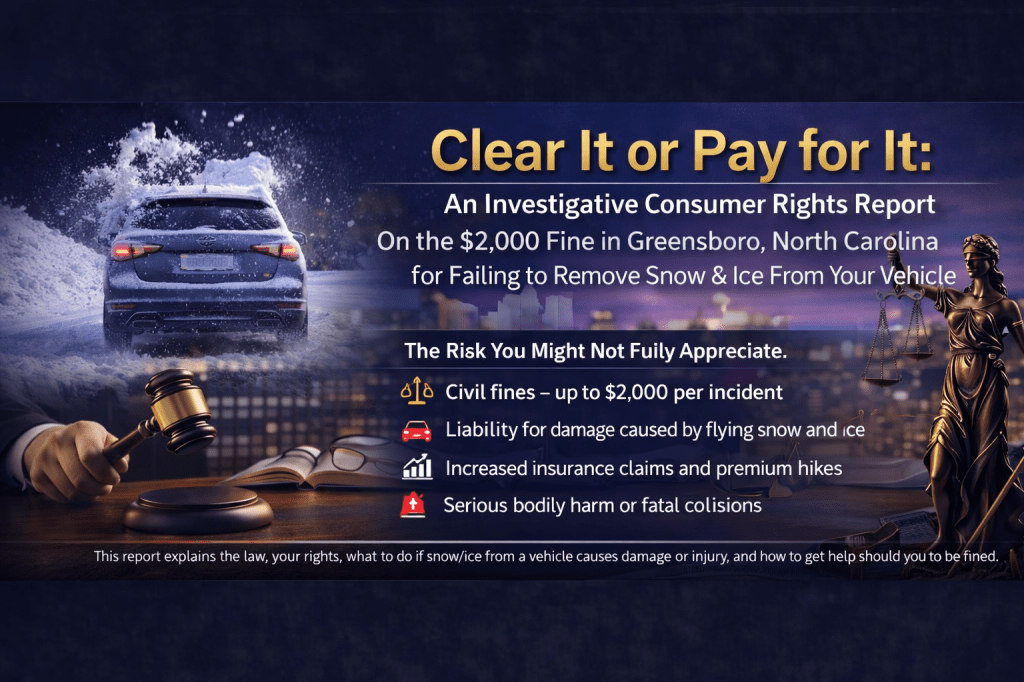
An Investigative Consumer Rights Report
On the $2,000 Fine in Greensboro, North Carolina for Failing to Remove Snow & Ice From Your Vehicle
Published by The Greensboro Chronicle
© 2026 The Greensboro Chronicle™ — All Rights Reserved.
❄️ The Risk You Might Not Fully Appreciate
Winter weather brings slippery roads, frosted windshields and — often overlooked — serious legal and safety obligations for vehicle owners to clear snow and ice from their cars and trucks.
In Greensboro, North Carolina, failing to properly remove snow and ice from your vehicle before driving can expose you to:
⚖️ Civil fines — up to $2,000 per incident 🚗 Liability for damage caused by flying snow and ice 📉 Increased insurance claims and premium hikes 🚨 Serious bodily harm or fatal collisions
This report explains the law, your rights, what to do if snow/ice from a vehicle causes damage or injury, and how to get help should you be fined.
📜 What the Law Means — In Plain Language
North Carolina’s vehicle code includes requirements related to keeping vehicles safe and visible. While the state does not have a specific statute that says “you must remove all snow and ice,” prosecutors and law enforcement increasingly use broader vehicle safety and negligence laws to issue citations.
In Greensboro and throughout North Carolina:
Drivers are required to operate vehicles in a safe condition. Snow or ice that becomes dislodged and strikes another vehicle or person can be treated as negligence. Law enforcement can charge drivers when snow or ice creates a traffic hazard.
👉 In practice, officers frequently cite negligent operation or careless driving when snow or ice from a vehicle leads to an accident or hazard.
The maximum fine for certain moving violations in North Carolina — including impaired operations or reckless conduct — can reach $2,000.
🔎 Why This Matters to You
Even if a fine isn’t issued at the scene, you can still be:
💥 Held financially responsible if snow/ice from your vehicle injures a person 🚗 Sued if your vehicle causes property damage due to flying ice or snow 🧾 Required to defend against insurance claims 🪪 Facing higher insurance premiums 📉 Exposed to civil liability beyond the fine

🧳 BEFORE You Drive
✔️ Step-by-Step Snow & Ice Removal
Before starting your vehicle:
Clear all windows and mirrors — no partial scraping. Remove snow from the roof, hood, and trunk — not just the glass. Brush off headlights, taillights, and signals. Clear snow from wheel wells and top edges of tires. Double-check the entire vehicle for ice chunks that could fall off.
Even small ice chunks can fly at high speed and become deadly projectiles.
🚗 If Snow/Ice FROM YOUR Vehicle Hits Another Vehicle
If a piece of ice or snow becomes airborne from your vehicle and:
📍 It damages another vehicle:
Stop immediately. Exchange names, contact info, and insurance details. Photograph the scene — including vehicle positions, debris, and damage. File a police report if required by law or if damage is significant. Notify your insurance company as soon as possible.
📍 It injures another person:
Call 911 immediately. Provide first responders with accurate information. Do not admit fault at the scene — but cooperate with investigators. Contact your insurance agent and consider legal counsel.
Police will determine whether charges or fines are appropriate.
🚗 If Snow/Ice FROM ANOTHER VEHICLE Hits YOU
Ensure safety first — move to a safe location. Document everything: License plate number Photos of damage Weather and road conditions Exchange information with the other driver. Call police if required or if injuries are present. File an insurance claim promptly.
Insurance may cover damage under comprehensive or collision coverage, depending on your policy.
📌 Consumer Rights & How to Fight an Unjust Fine
If you are issued a citation — including a potential $2,000 fine — you have the following rights:
Right to Due Process: You may contest the fine in court. Right to Evidence: You can request police reports, photos, and incident records. Right to Representation: You may hire an attorney to represent you. Right to Appeal: If you lose your case, you generally have appeal rights.

🆘 Where to Find Assistance
Legal Help
Greensboro Bar Association Lawyer Referral Service North Carolina Bar Association Consumer Assistance Programs Local civil rights or legal aid services
Insurance Guidance
Contact your agent or insurer’s claims department immediately. Ask about coverage for snow/ice damage. Keep all documentation — estimates, photos, correspondence.
Consumer Protection
North Carolina Attorney General’s Consumer Protection Division State and local traffic safety offices
❗ Why This Is More Than Just an Inconvenience
Driving with snow and ice on your vehicle isn’t merely a bad habit — when those chunks fly off at highway speeds, they can:
Shatter windshields Cause loss of control Result in road closures Lead to catastrophic injuries or deaths
And if a court finds that your failure to clear snow/ice contributed to an accident, damages awarded against you may far exceed any fine.
🧠 Final Takeaway
Clearing snow and ice from your vehicle isn’t optional — it’s a matter of safety and legal responsibility.
The potential consequences — financial, legal, and human — are serious.
Before you drive in wintry weather, clear your vehicle thoroughly and be prepared to act appropriately if an accident occurs — whether you’re at fault or injured by someone else.

⚖️ LEGAL DISCLAIMER
This article is provided for educational and informational purposes only and does not constitute legal advice. Laws vary by jurisdiction and change over time. Consult a licensed attorney for legal advice regarding your specific circumstances. The Greensboro Chronicle and its authors are not responsible for actions taken based on this report.
© 2026 The Greensboro Chronicle™, All Rights Reserved. Reproduction prohibited without express written permission
 Greensboro Chronicle
Leave a comment