📍 North Carolina & Regional Enforcement Perspective
In North Carolina, food safety oversight is shared with the North Carolina Department of Agriculture and Consumer Services (NCDA&CS).
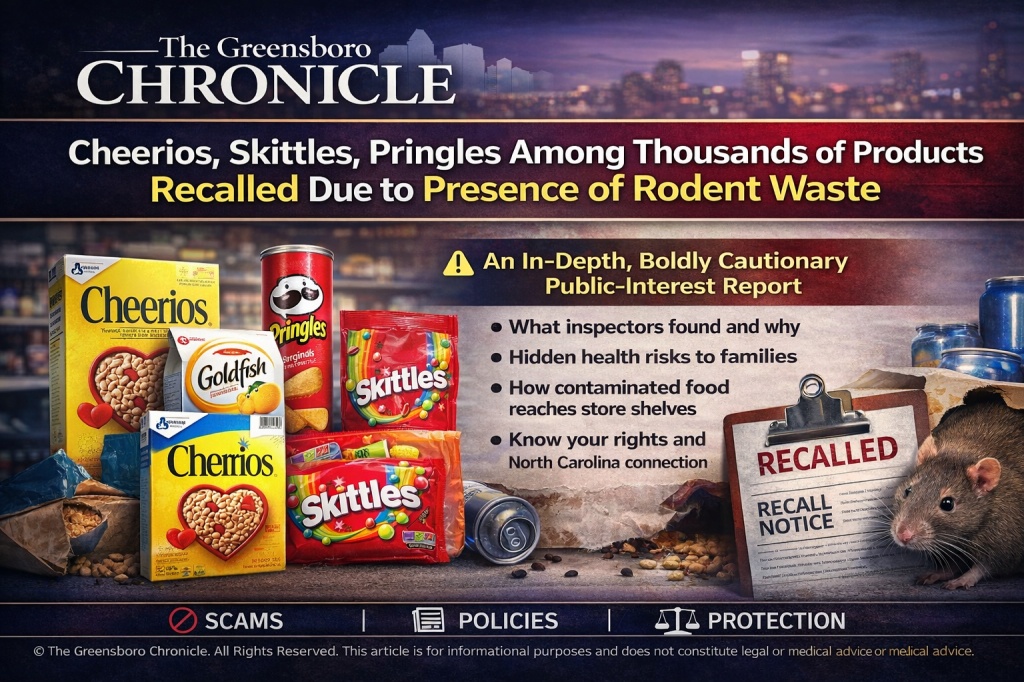
Public inspection data show:
Rodent activity is among the most common violations cited in warehouses Facilities often receive corrective timelines rather than immediate shutdowns North Carolina serves as a major distribution corridor, meaning local violations can trigger multi-state recalls
Consumer complaints frequently drive follow-up inspections, making public awareness a key enforcement tool.
Why This Story Matters
Rodent contamination recalls are not isolated mishaps. They reflect breakdowns in sanitation oversight, delayed enforcement, and a system that often reacts only after risk reaches the public. When foods marketed to families and children are involved, the consequences extend beyond inconvenience to public trust and health.
Food safety is not a branding issue. It is a public obligation.
Legal Disclaimer
This article is provided for informational and educational purposes only and does not constitute medical, legal, or regulatory advice. The Greensboro Chronicle relies on publicly available inspection reports, recall notices, and regulatory disclosures available at the time of publication. Recall status, findings, and enforcement actions may change. Readers should consult official recall announcements, healthcare providers, and qualified professionals for guidance specific to their situation.
Copyright Notice
© The Greensboro Chronicle. All rights reserved.
This article may not be reproduced, distributed, republished, or transmitted in whole or in part without the prior written permission of The Greensboro Chronicle, except for brief quotations used for news reporting, commentary, or educational purposes with proper attribution.
 Greensboro Chronicle
Leave a comment