An Educational, Informative & Cautionary Guide for Drivers
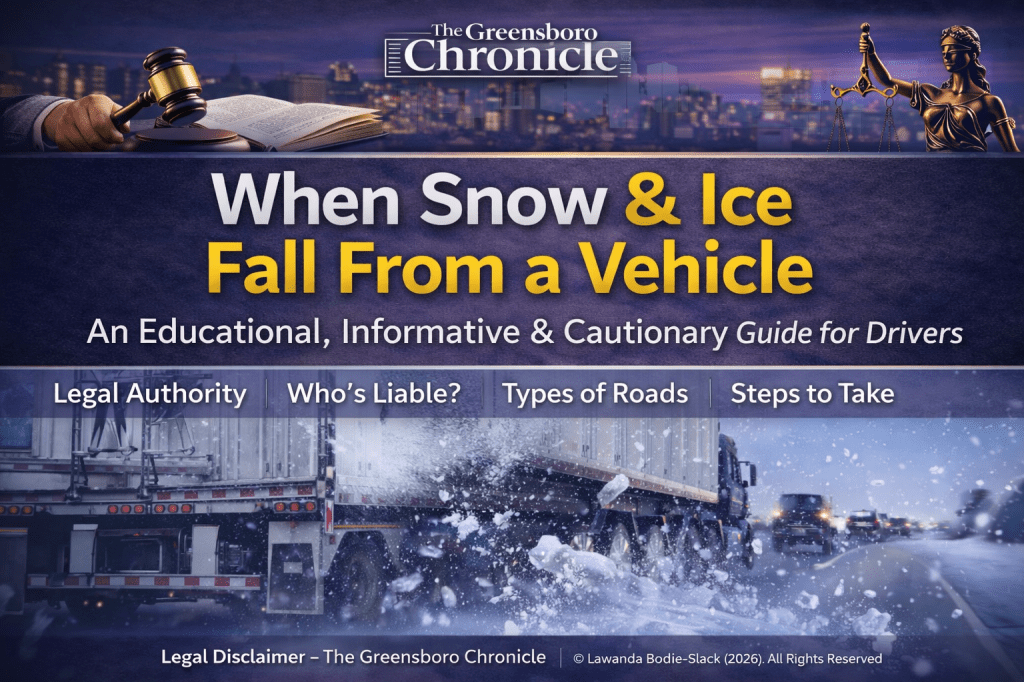
Each winter, crashes, shattered windshields, and serious injuries occur because snow or ice wasn’t removed from a vehicle before travel. What feels like a harmless oversight can quickly become a high-speed projectile. Below is a plain-language breakdown of the law, liability, and what to do if you’re affected—on local streets or at highway speeds.
1) Legal Authority Governing Liability
There is no single nationwide “snow-removal statute,” but liability is well-established through state traffic laws, equipment requirements, and negligence principles, plus commercial safety regulations.
Common legal bases include:
State “secure load” & obstruction laws – Prohibit operating a vehicle with unsecured material or obstructions that can fall, slide, or blow off and endanger others. Unsafe equipment / visibility statutes – Require clear windshields, mirrors, lights, and plates. Negligence law (duty of care) – Drivers have a duty to operate vehicles safely and prevent foreseeable harm. Commercial motor carrier regulations – Federal rules require commercial vehicles to secure loads and maintain safe equipment before entering roadways.
Courts consistently treat accumulated snow and ice that dislodges at speed as a foreseeable hazard—especially after warnings, weather advisories, and ample opportunity to clear the vehicle.
2) Who’s Liable? (Plain-Language Analysis)
Short answer:
👉 The driver who failed to remove the snow or ice is usually liable.
Why?
Snow and ice do not “fall by accident” at highway speed—they fall because the vehicle entered traffic without being properly cleared. Harm to following drivers (windshield strikes, loss of control, crashes) is predictable and preventable. Liability increases if: The vehicle is tall (SUVs, vans, box trucks, tractor-trailers) The driver had time to clear the vehicle Prior warnings or weather advisories were issued The ice sheet came from the roof, hood, or trailer top
Exceptions (rare):
Sudden, unforeseeable refreezing during travel after reasonable clearing efforts Proof that debris came from a different vehicle (hard to establish)
3) Local Roads vs. Highways: Liability Differences
🏙️ Local Roads / City Streets
Lower speeds, but higher expectations of care Police frequently cite drivers under: Obstructed view Unsafe equipment Careless or reckless driving Municipal codes may also apply Civil liability still attaches if damage or injury occurs
🛣️ Highways & Interstates
Much higher risk = greater legal exposure Snow or ice becomes a high-velocity projectile Commercial vehicles face: Federal enforcement Company liability Insurance scrutiny Multi-vehicle crashes can lead to significant civil damages
Courts routinely find that entering a highway without clearing snow/ice is unreasonable conduct given the known risks.
4) What To Do If You’re Hit on a Highway / Interstate
Immediately:
Get to safety – Pull over when safe; activate hazard lights Call 911 if there’s injury or major damage Do NOT chase the other vehicle at speed
Document everything:
Dashcam footage (save immediately) Photos/video of damage and ice residue License plate, company name, DOT number (if commercial) Location, time, weather conditions Witness names and contact info.
Official steps:
Request a police crash report Notify your insurer (state that debris fell from another vehicle) Seek medical evaluation—even if symptoms are delayed
5) What To Do on Local Roads
Safely stop and exchange information if the vehicle pulls over Photograph: The other vehicle (roof, hood, rear) Remaining snow/ice File a police report, especially if the driver flees Preserve repair estimates and receipts
Even at low speeds, windshield impacts and evasive maneuvers can establish fault.
6) Agencies & Departments That Can Assist
State Highway Patrol – Crash reports, citations Department of Transportation – Road conditions, commercial vehicle enforcement National Highway Traffic Safety Administration – Safety guidance & defect reporting Federal Motor Carrier Safety Administration – Commercial truck complaints Local Police Departments – Municipal enforcement & reports Insurance Regulators (State DOI) – Claims handling disputes Consumer Protection Divisions (Attorney General) – Pattern misconduct by companies
A Final Safety Note
Clearing snow and ice is not optional—it is a basic safety obligation. Five minutes with a brush can prevent life-altering injuries, costly lawsuits, and criminal citations. If snow or ice leaves your vehicle and strikes another, responsibility usually follows it.

Legal Disclaimer – The Greensboro Chronicle
This article is provided for general educational and informational purposes only and does not constitute legal advice. Laws vary by jurisdiction and facts matter. Readers should consult a qualified attorney or appropriate authority for advice specific to their situation.
© Copyright Notice
© The Greensboro Chronicle. All rights reserved. Reproduction, redistribution, or reuse without express written permission is prohibited
 Greensboro Chronicle
Leave a comment