
On the morning of January 28, 1986, America gathered around televisions expecting triumph. What unfolded instead—just 73 seconds after liftoff—was a moment that permanently altered the nation’s relationship with space, technology, and institutional trust. The Space Shuttle Challenger vanished into a cold Florida sky, and with it the lives of seven astronauts whose mission had come to symbolize not just exploration, but possibility itself.
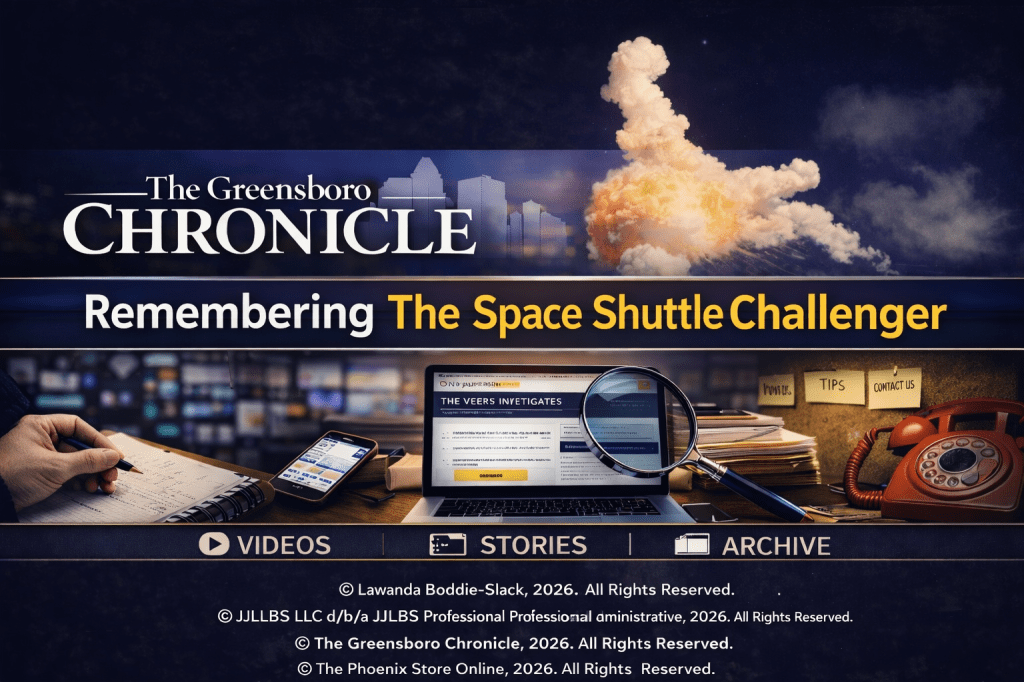
This was not merely a launch. It was a civic ritual. The presence of Christa McAuliffe, a New Hampshire schoolteacher selected to become the first civilian in space, transformed STS-51-L into a shared national classroom. Students across the country watched live, teachers paused lessons, and families leaned in—many for the first time—to witness spaceflight not as distant spectacle but as accessible future. That intimacy is what made the loss feel so immediate, so personal, and so devastating.
The crew—Francis Scobee, Michael Smith, Judith Resnik, Ellison Onizuka, Ronald McNair, Gregory Jarvis, and McAuliffe—represented the breadth of American aspiration: scientists, engineers, teachers, dreamers. Their collective presence underscored a promise NASA had made to the public—that space was no longer the domain of a select few, but a frontier the nation could enter together.
A Technical Failure—and a Human One
The cause of the disaster is now widely understood. An O-ring seal in one of Challenger’s solid rocket boosters failed in unusually cold temperatures, losing the elasticity needed to contain superheated gases. Those gases escaped, breached the external fuel tank, and triggered the catastrophic breakup of the vehicle.
But to stop the story there would be to miss its most enduring lesson.

Subsequent investigations revealed that the O-ring issue was not unknown. Engineers had raised concerns about cold-weather launches. Data existed. Warnings were voiced. What failed was not physics alone, but judgment—filtered through managerial pressure, schedule commitments, and a culture that slowly normalized risk. The launch went forward despite unresolved doubts, illustrating how organizations can drift toward danger not through malice, but through incremental compromise.
In that sense, Challenger stands as a case study far beyond aerospace. It is taught in engineering ethics courses, management seminars, and public administration programs because it exposes a universal vulnerability: when communication breaks down and dissent is softened or sidelined, even the most advanced systems can betray us.
The Cost of Silence
Perhaps the most haunting aspect of Challenger is that it did not reveal a lack of intelligence or capability at NASA. It revealed the peril of not listening.
The agency’s post-disaster reckoning acknowledged profound organizational flaws—blurred lines of authority, insufficient safety independence, and a culture where “proving it’s unsafe” replaced “proving it’s safe.” In response, NASA grounded the shuttle fleet for nearly three years, redesigned critical components, and restructured safety oversight. These reforms were costly, painful, and necessary.
Yet the deeper reform was cultural: a renewed emphasis on speaking up, documenting risk, and empowering engineers to halt operations without fear of reprisal. Challenger forced NASA—and the nation—to confront an uncomfortable truth: progress without humility can be lethal.

Memory as Responsibility
Nearly four decades later, Challenger still casts a long shadow. Its legacy lives not only in memorials and anniversaries, but in every checklist revised, every launch delayed for weather, every engineer who insists on one more review. The astronauts did not die in vain if their story continues to protect those who follow.
“They reached for the stars—and became part of them” is more than poetic remembrance. It is a charge. To remember Challenger is to accept responsibility: to value caution alongside courage, to elevate truth over timelines, and to recognize that exploration, at its best, is an act of collective care.
On that cold January morning, seven lives were lost before a watching world. What endures is the obligation to ensure that when humanity reaches for the heavens again, it does so with wisdom equal to its wonder.

Legal Disclaimer
The Greensboro Chronicle is an independent journalistic and educational publication. All content published by The Greensboro Chronicle is provided for informational, educational, and public-interest purposes only.
The views, opinions, analyses, and interpretations expressed in articles, editorials, investigations, and commentary represent those of the respective authors and contributors and do not constitute legal advice, financial advice, or professional counsel of any kind. Readers are encouraged to consult qualified professionals regarding specific legal, financial, or personal matters.
While The Greensboro Chronicle strives for accuracy, fairness, and thorough sourcing, no representation or warranty is made regarding the completeness, accuracy, or timeliness of the information provided. Content is based on publicly available records, historical documentation, eyewitness accounts, expert commentary, and credible reporting at the time of publication.
References to individuals, organizations, or events are made for news reporting, commentary, historical documentation, and fair use purposes as protected under the First Amendment and applicable copyright laws.
The Greensboro Chronicle does not assume liability for actions taken or not taken by readers based on published content. Use of this publication constitutes acknowledgment and acceptance of this disclaimer.
Copyright Statement
© Lawanda Boddie-Slack, 2026. All Rights Reserved.
© JJLBS LLC, d/b/a JJLBS Professional Administrative Services, 2026. All Rights Reserved.
© The Greensboro Chronicle, 2026. All Rights Reserved.
© The Phoenix Store Online, 2026. All Rights Reserved.
All original content, including but not limited to text, articles, investigative reports, graphics, images, audio, video, layouts, branding elements, and design compositions, is the intellectual property of the respective copyright holders and is protected under United States and international copyright laws.
No portion of this publication may be reproduced, distributed, transmitted, displayed, or repurposed in any form without prior written permission, except as permitted under the doctrine of fair use.
 Greensboro Chronicle
Leave a comment