An information op-ed in full tabloid mode—because sometimes the candy aisle deserves a warning label.
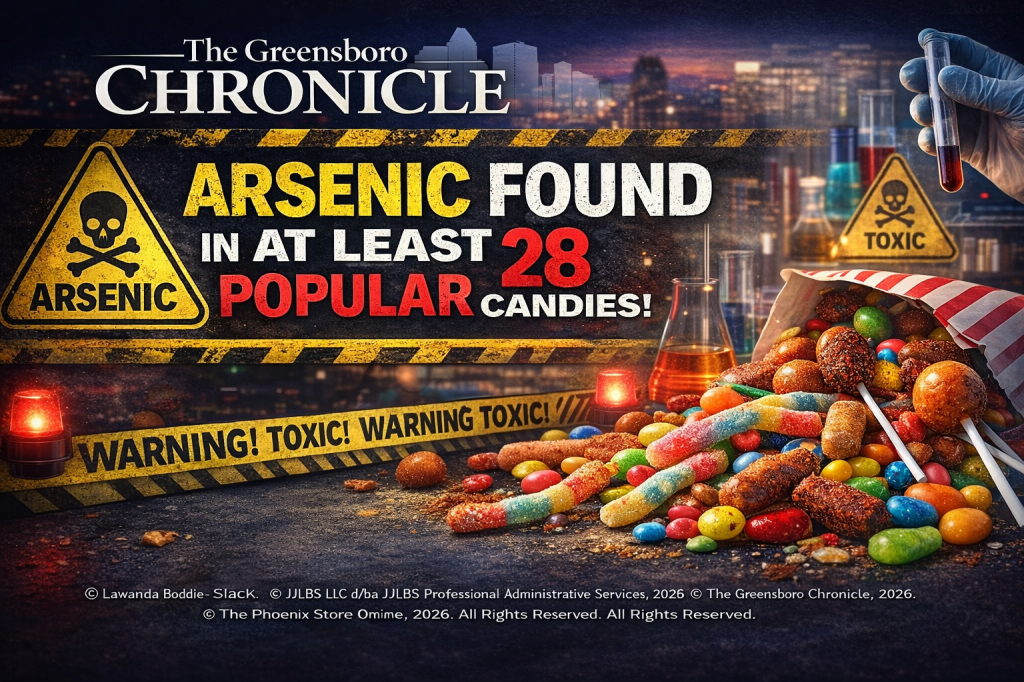
🍬 A Bitter Bite Behind the Sugar Rush
They’re colorful. They’re nostalgic. They’re marketed to kids and sold by the cartload.
And now—according to a growing pile of public lab reports, consumer complaints, and litigation filings—28 popular candies have allegedly tested positive for measurable levels of arsenic.
Yes. That arsenic.
The same element historically associated with rat poison, groundwater contamination, and the phrase “How is this even legal?”
🧪 What the Reports Say (Plain Language)
Across multiple independent food safety tests, consumer advocacy investigations, and discovery materials referenced in lawsuits:
Detectable arsenic was reportedly found in dozens of mass-market candies Products allegedly include fruit-flavored, chili-coated, sour, and imported candies Some results indicate inorganic arsenic, the form most closely linked to: Cancer risk Neurological harm Developmental issues in children
No, this doesn’t mean one piece will drop you on the spot.
But it does raise red flags when exposure is repeated, cumulative, and in children—the very audience these candies target.
🧠 How Does Arsenic End Up in Candy Anyway?
Here’s where it gets uncomfortable:
🌱 Agricultural Contamination
Arsenic naturally exists in soil and water Crops like rice, corn, chili peppers, and tamarind can absorb it These ingredients are commonly used in candy flavoring, fillers, and coatings
🌎 Imported Ingredients = Different Standards
Some countries permit higher heavy-metal thresholds Ingredients may pass overseas checks but raise alarms under U.S. testing
🏭 Manufacturing Blind Spots
Heavy metals are not always required to be batch-tested Finished candy products may never be screened unless someone complains—or sues
📂 Complaints, Lawsuits & “We Didn’t Know”
Public records reveal a familiar pattern:
Parents notice symptoms or lab tests Independent testing confirms heavy metals Manufacturers deny knowledge Litigation alleges failure to warn, negligent sourcing, and deceptive marketing
In multiple cases, filings argue:
Consumers were never informed of arsenic risks Products were marketed as safe for children No clear warnings existed despite known contamination pathways
Translation: If you don’t test, you don’t have to tell.
⚖️ Is This Even Legal?
Here’s the legal gray zone that makes this story explode:
There is no universal federal arsenic limit for candy The FDA often relies on “action levels”, not hard bans Enforcement is typically reactive, not proactive
So yes—something can be lawfully sold and scientifically troubling at the same time.
Welcome to food regulation roulette.
👶 Why Kids Face the Highest Risk
Children:
Eat more candy per pound of body weight Are more vulnerable to neurotoxic exposure Can accumulate arsenic effects over time
Which makes the optics of arsenic-tainted candy especially ugly when cartoon mascots are involved.
🧯 What Consumers Can Do Right Now
Until regulators catch up with reality:
🧾 Watch for testing disclosures and ingredient sourcing transparency 🌎 Be cautious with imported candies lacking U.S. testing verification 🧪 Look for brands that voluntarily test for heavy metals 📣 File consumer complaints—paper trails matter ⚖️ If harm is suspected, document everything

📰 The Real Headline
This isn’t about panic.
It’s about disclosure, accountability, and consumer choice.
Because when arsenic shows up where sugar should be, the real poison isn’t just in the candy—it’s in the silence.
⚖️ Legal Disclaimer
The Greensboro Chronicle
The Greensboro Chronicle is an independent media publication providing news reporting, investigative journalism, commentary, and opinion-based analysis on matters of public interest, including consumer protection, civil rights, public safety, and legal affairs.
All content published by The Greensboro Chronicle is provided for informational and educational purposes only and does not constitute legal advice, medical advice, regulatory guidance, or professional counsel of any kind. Readers should not act or refrain from acting based solely on information contained in this publication without seeking appropriate professional advice from a licensed attorney, physician, or qualified expert.
Reports, articles, and opinion pieces may reference public records, laboratory findings, regulatory filings, consumer complaints, court pleadings, media reports, and other publicly available sources. Allegations, claims, and litigation referenced are unproven unless and until adjudicated by a court of competent jurisdiction. The Greensboro Chronicle makes no assertion of guilt, liability, or wrongdoing by any individual, manufacturer, distributor, or entity unless explicitly stated as established fact by a final legal determination.
Scientific findings and test results discussed may vary based on methodology, sample size, jurisdictional standards, and evolving regulatory guidance. No warranty is made as to completeness, accuracy, or current applicability.
The Greensboro Chronicle expressly disclaims liability for any loss, injury, or damages arising from the use or reliance upon published content.
© Copyright Statement
© Lawanda Boddie-Slack, 2026. All Rights Reserved.
© JJLBS LLC, d/b/a JJLBS Professional Administrative Services, 2026. All Rights Reserved.
© The Greensboro Chronicle, 2026. All Rights Reserved.
© The Phoenix Store Online, 2026. All Rights Reserved.
No portion of this publication, including text, graphics, images, layouts, logos, or original investigative content, may be reproduced, distributed, transmitted, displayed, published, or otherwise exploited in any form or by any means without prior written permission, except as permitted under applicable copyright and fair-use laws
 Greensboro Chronicle
Leave a comment