
January 27, 2026
John Lee Staff Writer
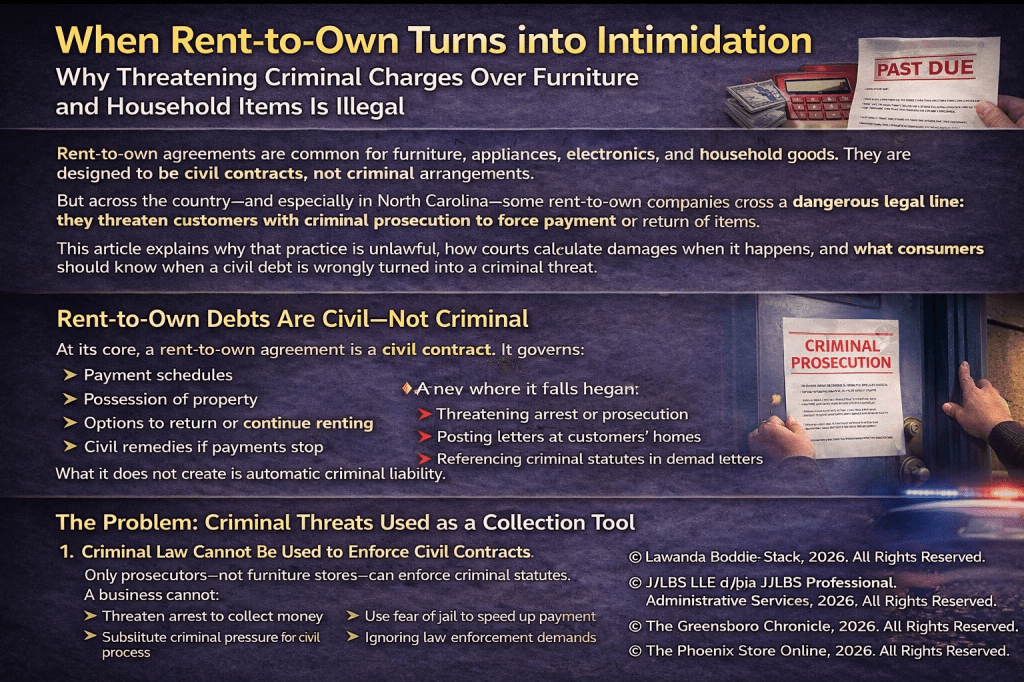
Why Threatening Criminal Charges Over Furniture and Household Items Is Illegal
Rent-to-own agreements are common for furniture, appliances, electronics, and household goods. They are designed to be civil contracts, not criminal arrangements.
But across the country—and especially in North Carolina—some rent-to-own companies cross a dangerous legal line:
they threaten customers with criminal prosecution to force payment or return of items.
This article explains why that practice is unlawful, how courts calculate damages when it happens, and what consumers should know when a civil debt is wrongly turned into a criminal threat.

Rent-to-Own Debts Are Civil—Not Criminal
At its core, a rent-to-own agreement is a civil contract. It governs:
Payment schedules Possession of property Options to return or continue renting Civil remedies if payments stop
What it does not create is automatic criminal liability.
A customer who falls behind—even significantly—has not committed a crime simply by being late, experiencing hardship, or disputing charges.
Criminal law is reserved for conduct like theft or fraud—not payment disputes.
The Problem: Criminal Threats Used as a Collection Tool
Some rent-to-own businesses attempt to bypass civil courts by:
Threatening arrest or prosecution Posting letters at customers’ homes Referencing criminal statutes in demand letters Implying police involvement if payment is not made
These tactics are often used:
After a customer explains a hardship After payment is refused After a cease-and-desist is sent When lawful civil remedies are slower or inconvenient
Courts view this behavior as coercion, not collection.

Why Threatening Criminal Charges Is Unlawful in Rent-to-Own Disputes
1. Criminal Law Cannot Be Used to Enforce Civil Contracts
Only prosecutors—not furniture stores—can enforce criminal statutes.
A business cannot:
Threaten arrest to collect money Use fear of jail to speed up payment Substitute criminal pressure for civil process
Doing so misrepresents the law and exploits consumers’ fear.
2. Criminal Statutes Have Strict Requirements
Even where criminal statutes exist that mention rented property, they typically require proof of intent to defraud, such as:
Selling or hiding the property Refusing to comply with a court order Removing property from the state Ignoring law-enforcement demands
Late payment, hardship, or dispute does not meet those elements.
Threatening criminal prosecution without those elements is a false statement of legal rights.
3. Using Criminal Threats Is Considered Coercive and Oppressive
Courts recognize that threatening criminal charges:
Exploits fear of arrest Intimidates families in their homes Pressures people during vulnerable moments Forces payment not through law, but fear
That makes the conduct inherently unfair and deceptive.

Legal Disclaimer
The information contained herein is provided for educational and informational purposes only and does not constitute legal advice. Nothing presented should be construed as creating an attorney–client relationship. Laws and legal procedures vary by jurisdiction and are subject to change. Readers are encouraged to consult with a qualified attorney or appropriate regulatory authority regarding their specific circumstances.
The views expressed are those of the author and publisher and are intended to promote public awareness, consumer education, and lawful compliance. Any reference to legal principles, statutes, or court practices is general in nature and may not apply to all situations.
Copyright Statement
© Lawanda Boddie-Slack, 2026. All Rights Reserved.
© JJLBS LLC d/b/a JJLBS Professional Administrative Services, 2026. All Rights Reserved.
© The Greensboro Chronicle, 2026. All Rights Reserved.
© The Phoenix Store Online, 2026. All Rights Reserved.
 Greensboro Chronicle
Leave a comment