By The Greensboro Chronicle | Public Safety & Consumer Protection Desk
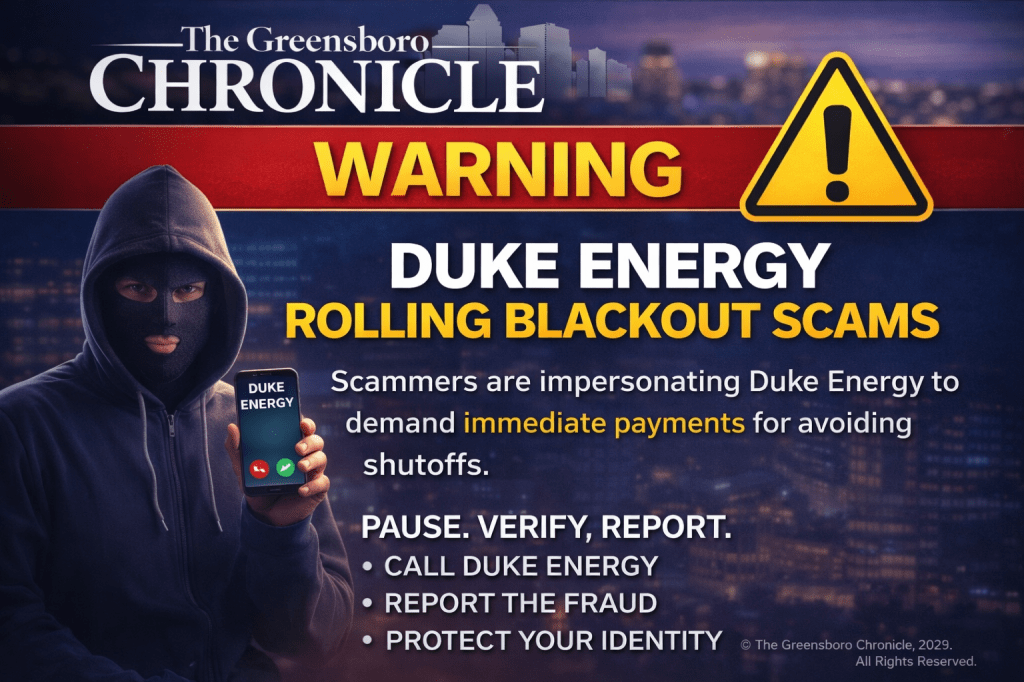
Across North Carolina and throughout the Southeast, consumers are reporting a surge in fraud schemes falsely claiming to represent Duke Energy. These scams exploit public concern about rolling blackouts, grid strain, extreme weather, and rising energy costs—using fear and urgency to pressure victims into making immediate payments.
Law enforcement and consumer protection agencies emphasize that these schemes are not associated with Duke Energy itself, but rather with criminals impersonating utility officials to steal money and personal information.
This article explains how the scam works, how victims are targeted, what warning signs to watch for, and what to do if you or someone you know has been affected.
1. How the Rolling Blackout Scam Works (Plain Language)
The scammer pretends to be Duke Energy—or a contractor “working on behalf of the utility”—and tells the victim that:
Their account is past due, flagged, or under investigation A rolling blackout, service interruption, or emergency disconnection is imminent Immediate payment is required to avoid shutoff or restore priority service
The scammer often claims the situation is time-sensitive due to:
Grid overload Severe weather Emergency maintenance “State-mandated rolling outages”
Victims are pressured to act within minutes, not hours—before they have time to verify the claim.
2. How Scammers Are Reaching Victims
Based on public consumer complaints and agency advisories, scammers commonly use:
📱 Phone Calls (Most Common)
Caller ID spoofing to display “Duke Energy,” “Utility Billing,” or a local number Robocalls followed by live operators Threatening or authoritative tone
💬 Text Messages (Smishing)
Messages stating “FINAL NOTICE” or “Service interruption pending” Links to fake payment portals Requests to “confirm account status”
📧 Emails (Phishing)
Fake invoices or disconnection notices Look-alike email addresses and logos Malicious links or attachments
🚪 In-Person Visits (Less Common, Higher Risk)
Individuals claiming to be utility workers Requests for payment to “cancel” a disconnect order Demands for cash, prepaid cards, or mobile payments
3. What to Watch Out For (Red Flags)
Consumer protection agencies stress that any one of the following should raise concern:
🚩 Demands for immediate payment
🚩 Threats of shutoff within minutes or hours
🚩 Requests for payment via:
Gift cards Zelle Cash App Venmo Cryptocurrency Wire transfer
🚩 Requests for Social Security numbers, PINs, or full account credentials
🚩 Links that do not originate from an official Duke Energy domain
🚩 Refusal to allow you time to call Duke Energy directly
Important: Duke Energy does not demand payment through gift cards, cryptocurrency, or peer-to-peer payment apps, and does not threaten instant disconnection without prior written notice.

4. What to Do If You’ve Been Scammed
If you believe you have been targeted or victimized:
Step 1: Stop Communication Immediately
Hang up Do not click links Do not send additional payments
Step 2: Contact Duke Energy Directly
Use the phone number on your actual bill or official website Ask them to verify your account status
Step 3: Report the Fraud
File a report with the Federal Trade Commission at IdentityTheft.gov Contact your bank or payment provider immediately
Step 4: Protect Your Identity
Change online account passwords Monitor bank and credit statements Consider a fraud alert or credit freeze if personal data was shared

5. Agencies Offering Help, Education, and Reporting
🔹 Duke Energy (Fraud Reporting)
Phone: 800-769-3766
Online: Duke Energy official website → Fraud & Scam Alerts
🔹 Federal Trade Commission (FTC)
Phone: 1-877-FTC-HELP (1-877-382-4357)
Online: IdentityTheft.gov
Email: ReportFraud@ftc.gov
🔹 North Carolina Attorney General’s Office
Phone: 1-877-5-NO-SCAM (1-877-566-7226)
Online: ncdoj.gov
Email: consumer@ncdoj.gov
🔹 North Carolina Utilities Commission
Phone: 919-733-9277
Online: ncuc.gov
Email: consumer.services@ncuc.gov
A Final Word to Consumers
Scammers succeed by creating panic and urgency. Legitimate utilities operate under regulated notice requirements and documented billing procedures. When in doubt, pause, verify, and report.
Public awareness remains the strongest defense.

Legal Disclaimer
This article is provided for educational and informational purposes only and does not constitute legal, financial, or professional advice. Readers should verify information with official sources and consult appropriate professionals regarding their specific circumstances.
Copyright Notice
© 2026 The Greensboro Chronicle. All rights reserved.
No part of this publication may be reproduced, distributed, or transmitted without prior written permission, except for brief quotations used for news reporting and educational purposes
 Greensboro Chronicle
Leave a comment