Copyright 2026 The Greensboro Chronicle. All Rights Reserved.
Where investigative journalism comes together with the community to find viable solutions to the issues.
About Us
Greensboro Chronicle, we believe journalism is more than reporting the news—it’s about uncovering the truth, amplifying community voices, and working toward real solutions.
We are an independent investigative news platform dedicated to shining a light on issues that matter most to the people of Greensboro. From housing and local governance to public safety, business, and neighborhood life, our mission is to hold power accountable while fostering meaningful dialogue among residents.
The Chronicle isn’t just a newsroom—it’s a community hub. We invite readers to not only stay informed, but also to participate in the conversation, share perspectives, and collaborate on solutions that strengthen our city.
Together, we can confront challenges, celebrate resilience, and shape a more transparent, just, and thriving Greensboro.
Greensboro Chronicle Investigative Staff and Volunteers
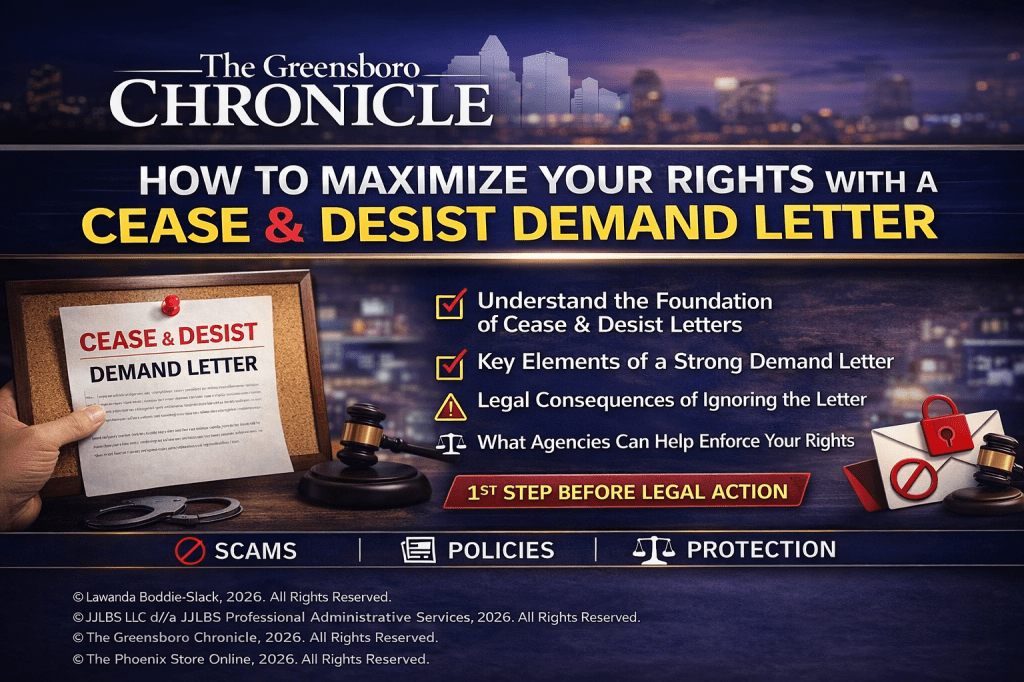
How to Maximize Your Rights With a Properly Crafted Legal Warning
A Cease & Desist Demand Letter is one of the most underutilized — and misunderstood — tools available to consumers, tenants, workers, creators, and small businesses. When drafted correctly, it is far more than a warning. It is documented notice, evidence of good-faith resolution, and often the first domino in civil enforcement.
In an era of automated debt collection, aggressive corporate overreach, digital harassment, and unlawful business practices, a properly crafted cease & desist letter can shift the balance of power back where it belongs — with the individual asserting their rights.
This investigation explains what these letters are, why they matter, how to draft them correctly, and what happens when they are ignored.
1. The Legal Foundation of Cease & Desist Demand Letters (Plain Language)
At its core, a cease & desist demand letter is a formal notice. It tells another party:
“You are engaging in conduct that violates my legal rights. You are now on notice. Stop.”
This matters because many areas of civil law require notice and an opportunity to cure before courts or regulators will impose penalties. Once notice is given:
Continued misconduct may become willful Damages may escalate Certain defenses are eliminated Regulatory agencies gain jurisdiction
Cease & desist letters are grounded in:
Contract law Consumer protection statutes Intellectual property law Harassment and privacy law Employment and labor protections Debt collection regulations
They are not criminal threats and do not require an attorney to be valid — though precision matters.
In short:
👉 A cease & desist letter turns misconduct into documented misconduct.
2. The Essential Parts of a Well-Drafted Cease & Desist Demand Letter
A weak letter is easy to ignore. A strong one becomes evidence.
A properly drafted cease & desist demand letter should include all of the following:
A. Clear Identification of the Parties
Your full legal name The name of the business, individual, or entity engaging in the conduct Addresses, emails, phone numbers if known
B. Statement of Facts (Chronological & Verifiable)
Dates Times Methods (calls, emails, visits, postings, publications) Specific actions taken
This section should read like a police report, not an opinion piece.
C. Identification of the Legal Violations
You do not need to cite every statute, but you should clearly identify:
What rights are being violated Whether the conduct is unlawful, deceptive, harassing, or unauthorized
This signals competence — and seriousness.
D. The Demand
Explicitly state:
What conduct must stop What conduct must not resume Any corrective action required
Ambiguity weakens enforceability.
E. Deadline for Compliance
A firm, reasonable deadline (often 7–14 days) establishes urgency and shows fairness.
F. Notice of Consequences
This is not a threat — it is disclosure.
Example:
“Failure to comply may result in regulatory complaints, civil action, and pursuit of statutory damages.”
G. Preservation of Rights Clause
Always include language stating:
“Nothing herein waives any rights or remedies available under law.”
H. Proof of Delivery
Certified mail, return receipt, email with read confirmation — documentation is critical.
3. When a Cease & Desist Demand Letter Is Ignored: Legal Consequences
Ignoring a properly drafted cease & desist letter is not harmless.
Once notice is given:
Violations may become willful Damages may increase Injunctions become more likely Courts may view the offender as acting in bad faith
In many consumer protection statutes, continued conduct after notice triggers enhanced penalties, including:
For businesses, ignoring such letters often backfires during:
Regulatory investigations Licensing reviews Civil discovery Media exposure
Silence does not equal safety.
4. Next Steps After a Demand Letter Is Ignored
If the deadline passes without compliance, the letter has already done its job — it has created a record.
Next steps may include:
A. Filing Regulatory Complaints
Many agencies require proof that the offender was notified. Your letter becomes Exhibit A.
B. Civil Litigation
Courts routinely ask:
“Did you attempt to resolve this before filing suit?”
A cease & desist letter answers that question.
C. Injunctive Relief
Courts are more likely to issue orders stopping conduct immediately when notice was ignored.
D. Public Accountability
For media organizations and advocacy outlets, documented notice strengthens investigative reporting and public interest disclosures.
5. Agencies That Can Assist With Enforcement
Depending on the nature of the violation, enforcement may involve one or more of the following:
Federal Trade Commission (FTC) – Unfair or deceptive business practices Consumer Financial Protection Bureau (CFPB) – Debt collection, credit reporting, financial misconduct State Attorney General’s Office – Consumer protection and civil enforcement State Labor Departments – Employment and wage violations Professional Licensing Boards – Ethical and regulatory misconduct Civil Courts – Injunctions and damages
These agencies often require evidence of notice — which is precisely what a cease & desist letter provides.
Why Cease & Desist Letters Still Matter
A cease & desist demand letter is not about intimidation.
It is about clarity, accountability, and record-building.
When properly drafted, it:
Preserves your rights Forces acknowledgment Strengthens enforcement Exposes bad-faith conduct
In an age where many actors rely on consumers not knowing their rights, a well-crafted cease & desist letter sends a clear message:
You are paying attention. And you are prepared to act.
Legal Disclaimer — The Greensboro Chronicle
The Greensboro Chronicle provides this article for educational and informational purposes only. Nothing contained herein constitutes legal advice, nor does it create an attorney-client relationship. Laws vary by jurisdiction, and readers are encouraged to consult a qualified attorney or appropriate regulatory agency regarding their specific legal situation.



 Greensboro Chronicle
Leave a comment