
By The Greensboro Chronicle Investigative Desk
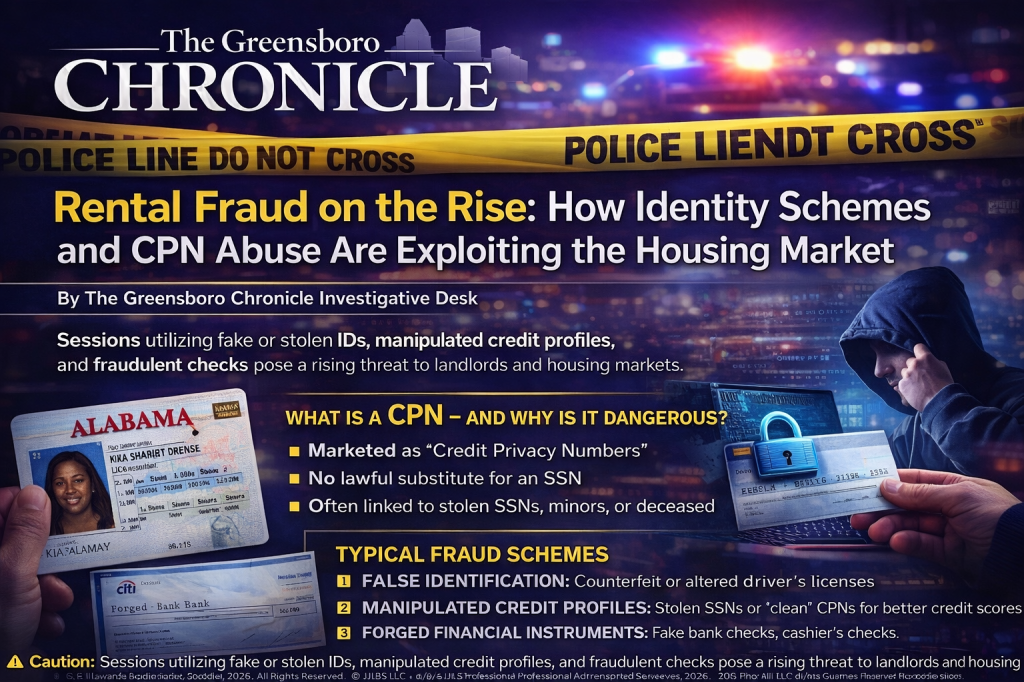
Across North Carolina and beyond, law enforcement agencies are reporting a sharp increase in rental fraud schemes targeting apartment complexes, private landlords, and property management companies. At the center of many of these cases is a familiar pattern: false identities, forged financial documents, and the illegal misuse of credit-related technology.
One method drawing increasing scrutiny is the fraudulent use of CPNs, often marketed online as “Credit Privacy Numbers” or “credit profile numbers.”
What Is a CPN — and Why Is It Dangerous?
A CPN is often falsely advertised as a legal alternative to a Social Security number. In reality:
There is no legitimate consumer use for a CPN in place of an SSN Many CPNs are stolen, fabricated, or linked to minors, elderly individuals, or deceased persons Using a CPN to apply for housing, credit, or utilities may constitute identity theft, wire fraud, and false pretenses
Despite online claims, federal and state authorities consistently warn that using a CPN to rent or lease property is illegal when done to conceal identity or credit history.
How Rental Fraud Schemes Typically Work
Investigators note a recurring pattern in cases involving fraudulent rentals:
False Identification Fraudsters present altered or counterfeit driver’s licenses to establish a new identity. Manipulated Credit Profiles CPNs or stolen SSNs are used to generate “clean” credit reports, bypassing poor credit or prior evictions. Forged Financial Instruments Fake cashier’s checks or bank drafts are used to secure move-in approval before fraud is detected. Rapid Occupancy Once approved, suspects may quickly occupy the unit, complicating eviction and recovery efforts.

Who Pays the Price?
Rental fraud doesn’t just impact property owners. The fallout includes:
Financial losses for landlords Higher rents and stricter screening for legitimate tenants Identity theft victims facing long-term credit damage Court systems burdened with complex fraud cases
A Cautionary Reminder
Law enforcement officials stress that technology-based fraud is evolving faster than ever, and housing markets remain a prime target. What may be marketed online as a “credit fix” or “privacy solution” can quickly become a felony criminal case with lasting consequences.
Legal Reminder
This explainer is for public awareness and educational purposes. References to alleged criminal activity are based on publicly available information.
All individuals accused of crimes are presumed innocent unless and until proven guilty in a court of law.

 Greensboro Chronicle
Leave a comment