January 26, 2026
By The Greensboro Chronicle Investigative Desk
When Congress rushed trillions of dollars into the economy during the COVID-19 pandemic, speed was prioritized over scrutiny. The result was predictable: unprecedented relief paired with unprecedented fraud. What has proven less predictable is how long some of these cases continue to surface—years after the checks were issued and spent.
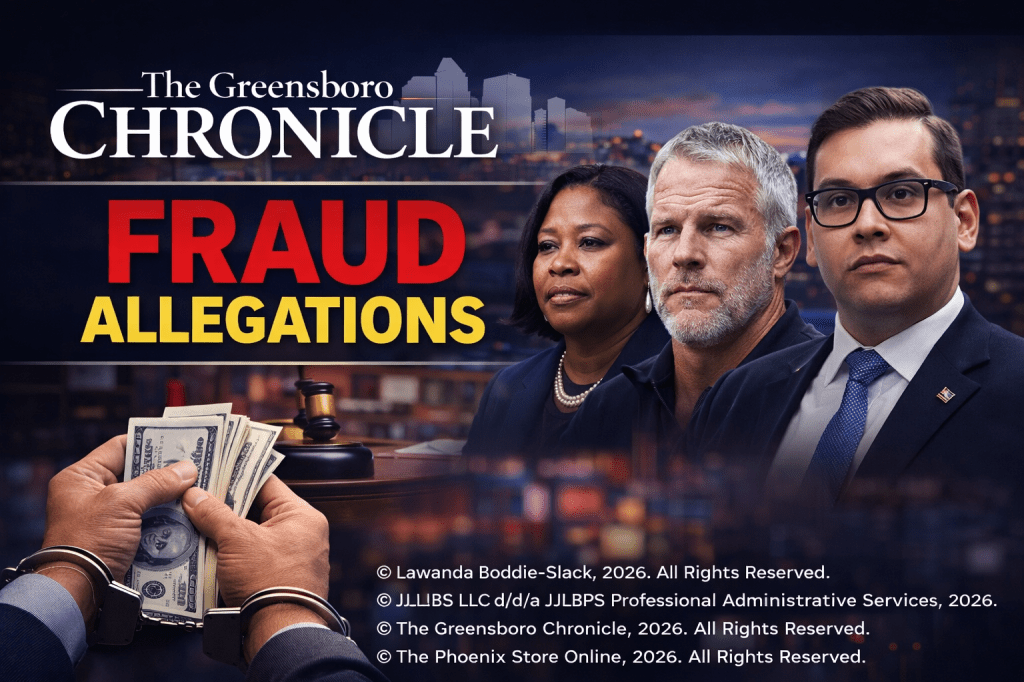
Recent allegations involving Sharon Henderson, alongside nationally publicized cases tied to Brett Favre, George Santos, and Mississippi welfare officials such as John Davis, raise a central question:
How do fraud cases survive when the statute of limitations appears to have expired?
This report examines the similarities and differences among these cases—and the legal mechanisms that allow prosecutors to keep them alive.

The Allegations at a Glance
Sharon Henderson: Unemployment Benefits Under Scrutiny
State Rep. Sharon Henderson has been accused of theft and making false statements to fraudulently obtain more than $17,000 in COVID-19 unemployment benefits. According to publicly available court filings and reporting, investigators allege that representations made to obtain benefits conflicted with eligibility requirements under pandemic relief programs.
Henderson has denied wrongdoing. As with all defendants, she is presumed innocent unless and until proven guilty in a court of law.
Brett Favre: Welfare Funds and Celebrity Influence
In Mississippi, Brett Favre became entangled in one of the largest public-assistance scandals in state history. Prosecutors allege that Temporary Assistance for Needy Families (TANF) funds were improperly diverted to projects that benefited Favre or his associates, including a volleyball facility at a public university.
Unlike traditional unemployment fraud, this case centers on misuse of welfare funds through nonprofit intermediaries, rather than direct benefit applications.
George Santos: Pandemic Unemployment Fraud
Former U.S. Representative George Santos has admitted in federal court to multiple fraud schemes, including illegally collecting COVID-19 unemployment benefits while simultaneously earning income. His case stands out for its clarity: financial records, benefit filings, and admissions all align.
Santos’s prosecution demonstrates how federal jurisdiction and documentary evidence can simplify pandemic fraud cases.
John Davis and Mississippi Welfare Officials
Former Mississippi Department of Human Services Director John Davis and others were accused of conspiring to misuse federal welfare funds intended for low-income families. These allegations involve long-running schemes, layered nonprofits, and ongoing concealment, extending the legal lifespan of the case.

Similarities Across the Cases
Despite differences in scale and visibility, these cases share notable traits:
Federal money (either directly or indirectly) COVID-era emergency programs with relaxed oversight Alleged misrepresentations or omissions Delayed discovery of the alleged misconduct Public trust implications, particularly for elected or influential figures.
Why These Cases Still Exist: The Statute of Limitations Explained
At first glance, many COVID-related claims appear time-barred. Most fraud statutes carry 3–6 year limitation periods. However, several legal doctrines allow cases to survive well beyond the apparent deadline.
1. Delayed Discovery Rule
The statute of limitations may not begin until the fraud was discovered or reasonably could have been discovered—particularly when defendants allegedly concealed the misconduct.
2. Continuing Offense Doctrine
If fraudulent benefits were received over time, each payment can restart or extend the limitations period.
3. Conspiracy Charges
When prosecutors allege conspiracy, the clock often runs from the last overt act, not the initial fraud.
4. False Statements to the Government
Lying to obtain benefits can trigger separate charges under state or federal false-statement statutes, each with its own limitations period.
5. Federal Tolling During Emergencies
Certain federal statutes allow tolling when investigations were delayed due to extraordinary circumstances—including pandemic-related disruptions.

Why Prosecutors Pursue These Cases
Beyond recovering funds, these prosecutions serve broader purposes:
Deterrence for future emergency-fund abuse Restoring public confidence in relief programs Signaling accountability, regardless of status or office
As one former federal prosecutor noted publicly, “Pandemic fraud didn’t disappear—it simply aged.”
A Final Legal Reality Check
It is critical to underscore that allegations are not convictions. Each individual discussed in this article retains the full presumption of innocence and the right to due process. Outcomes will depend on evidence, procedural rulings, and judicial interpretation of complex statutes.

Legal Disclaimer
This article is published by The Greensboro Chronicle for informational and journalistic purposes only. It does not constitute legal advice, nor should it be relied upon as such. All individuals referenced are presumed innocent unless and until proven guilty in a court of law. Allegations, charges, and investigations are subject to change as legal proceedings continue.
Copyright Notice
© 2026 The Greensboro Chronicle. All rights reserved.
No portion of this article may be reproduced, distributed, or transmitted in any form or by any means without prior written permission, except for brief quotations used for news reporting, commentary, or scholarly purposes.
 Greensboro Chronicle
Leave a comment