
January 26, 2026
By The Greensboro Chronicle
Public Health & Safety Desk
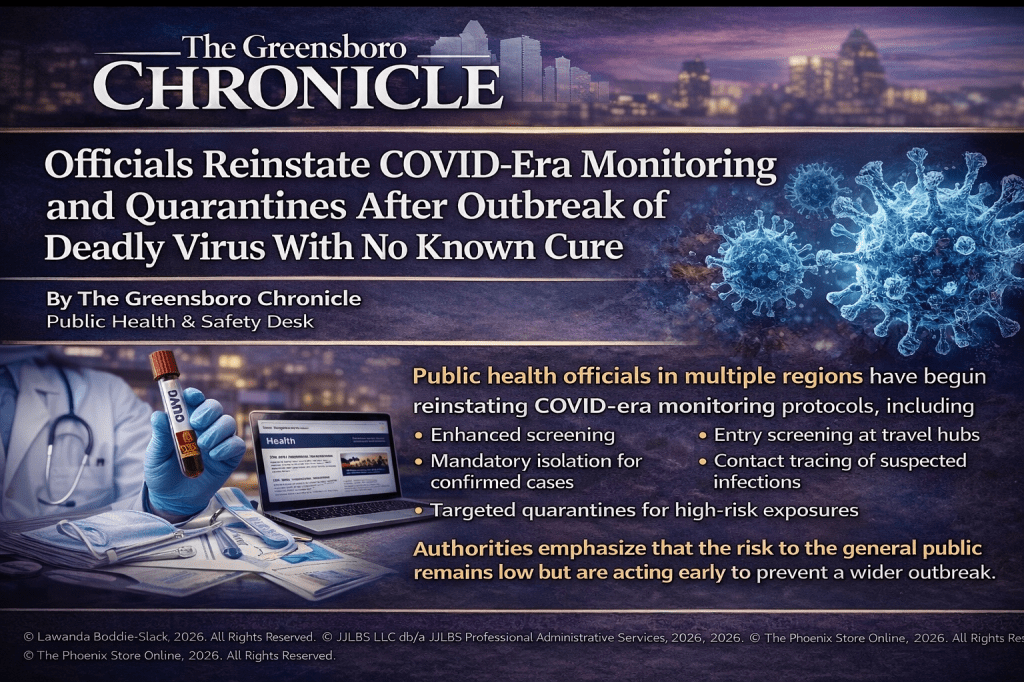
Public health officials in multiple regions have begun reinstating COVID-era monitoring protocols, including enhanced screening, isolation measures, and targeted quarantines, following the detection of a high-mortality viral outbreak for which no definitive cure currently exists. While authorities emphasize that the risk to the general public remains low at this time, the response reflects lessons learned during the COVID-19 pandemic: early containment, rapid communication, and public cooperation save lives.
The virus—classified by health agencies as a severe viral hemorrhagic or systemic infection depending on strain—has drawn international concern due to its high fatality rate, person-to-person transmission through bodily fluids, and the absence of an approved curative treatment. Management relies primarily on early detection, supportive medical care, and strict infection-control practices.
Health agencies stress that these measures are precautionary, not panic-driven, and are designed to prevent the kind of uncontrolled spread seen during past global outbreaks.

Why COVID-Era Measures Are Being Reinstated
Public health officials are applying strategies refined during the COVID-19 pandemic, including:
Entry screening at ports of travel Contact tracing and exposure monitoring Mandatory isolation for confirmed cases Quarantine for high-risk exposures Enhanced reporting requirements for healthcare facilities
These protocols are being reintroduced not because the viruses are the same, but because the public-health principles of containment remain effective when facing fast-moving infectious diseases.
Unlike COVID-19, however, this virus is not airborne in most documented cases. Transmission typically requires direct contact with infected bodily fluids, contaminated surfaces, or unsafe medical handling. Still, healthcare systems are operating under the assumption that early missteps can have fatal consequences.
Signs and Symptoms to Watch For
Symptoms may appear 2 to 21 days after exposure, depending on the virus and individual immune response. Early symptoms often resemble common viral illnesses, which can delay diagnosis.
Early Symptoms
Sudden high fever Severe headache Muscle and joint pain Profound fatigue or weakness Sore throat
Progressive or Severe Symptoms
Vomiting or persistent nausea Diarrhea (sometimes severe) Abdominal pain Unexplained bruising or bleeding Rash or skin discoloration Organ dysfunction in advanced cases
Health officials warn that symptoms can escalate rapidly, particularly in individuals with underlying health conditions or compromised immune systems.
When to Seek Medical Care Immediately
You should seek urgent medical evaluation if you experience symptoms and have:
Traveled to an affected region Had contact with a confirmed or suspected case Worked in healthcare, laboratory, or emergency response roles Been exposed to bodily fluids of an ill person
⚠️ Do not show up unannounced to an emergency room if exposure is suspected.
Instead, call ahead so medical staff can prepare appropriate infection-control measures.
Early medical intervention significantly improves outcomes and protects healthcare workers and other patients.

What to Communicate to Medical Professionals
Clear, accurate communication can save critical time. Be prepared to provide:
Recent travel history (countries, cities, dates) Known or possible exposures to ill individuals Timeline of symptoms (when they began and how they progressed) Underlying medical conditions Current medications or immune-suppressing treatments Occupational risks (healthcare, caregiving, lab work)
Do not minimize symptoms or exposures out of fear or embarrassment. Transparency is essential for effective care and public safety.
How These Viruses Are Treated
At present, there is no universally approved curative treatment for several of the viruses prompting these responses. Medical care focuses on:
Aggressive supportive treatment (fluids, oxygen, blood products) Management of complications Experimental or emergency-authorized therapies when available Strict isolation to prevent spread
Vaccine research and antiviral development are ongoing, but public health officials caution that prevention remains the most effective defense.
Public Health Guidance for the Community
Officials urge the public to:
Stay informed through verified public-health sources Avoid spreading unverified claims or panic-driven misinformation Practice good hygiene and infection-control habits Respect quarantine and monitoring directives if issued Support healthcare workers and public health responders
History has shown that early vigilance and community cooperation can mean the difference between containment and crisis.

A Caution, Not a Cause for Panic
Health authorities stress that the reinstatement of monitoring and quarantine protocols is a sign of preparedness, not impending catastrophe. These systems exist precisely to prevent worst-case scenarios.
Public cooperation, responsible media coverage, and informed awareness remain the strongest tools in confronting emerging health threats—especially those with no immediate cure.

Legal & Medical Disclaimer
The Greensboro Chronicle provides this content for informational and educational purposes only. This article is not intended as medical advice, diagnosis, or treatment. Readers should consult qualified healthcare professionals or public health authorities for guidance specific to their individual circumstances. The Greensboro Chronicle makes no guarantees regarding outcomes related to the use or interpretation of this information.
Copyright Statement
© Lawanda Boddie-Slack, 2026. All Rights Reserved.
© JJLBS LLC d/b/a JJLBS Professional Administrative Services, 2026. All Rights Reserved.
© The Greensboro Chronicle, 2026. All Rights Reserved.
© The Phoenix Store Online, 2026. All Rights Reserved.
 Greensboro Chronicle
Leave a comment