
January 26, 2026
Jasmine Dantzler Health & Public Safety
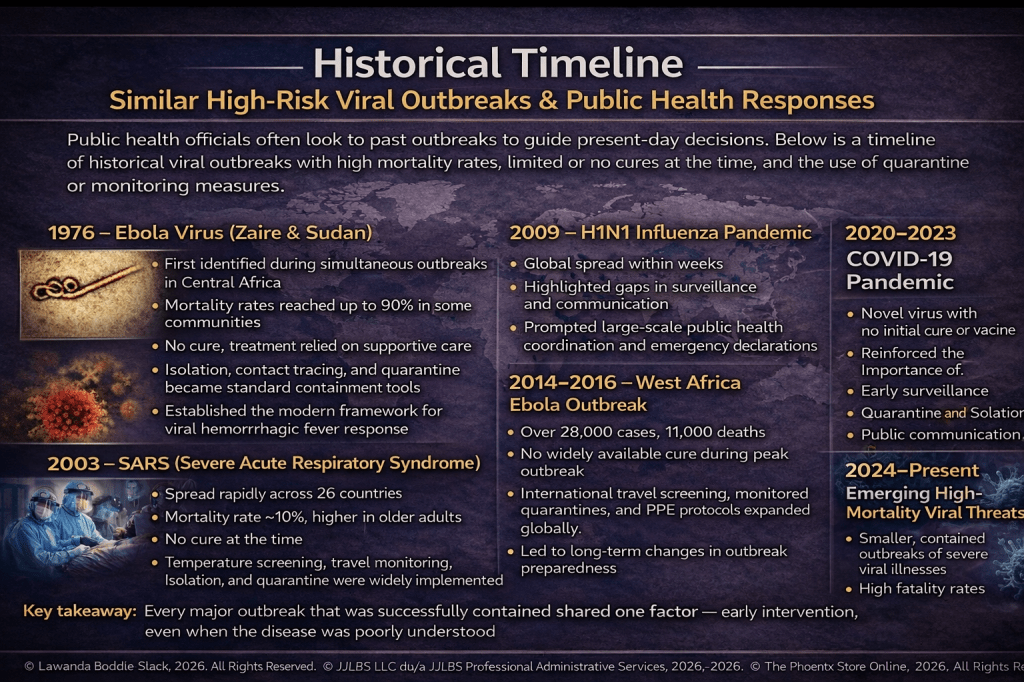
Public health officials often look to past outbreaks to guide present-day decisions. Below is a timeline of historical viral outbreaks with high mortality rates, limited or no cures at the time, and the use of quarantine or monitoring measures.
1976 – Ebola Virus (Zaire & Sudan)
First identified during simultaneous outbreaks in Central Africa Mortality rates reached up to 90% in some communities No cure; treatment relied on supportive care Isolation, contact tracing, and quarantine became standard containment tools Established the modern framework for viral hemorrhagic fever response
2003 – SARS (Severe Acute Respiratory Syndrome)
Spread rapidly across 26 countries Mortality rate ~10%, higher in older adults No cure at the time Temperature screening, travel monitoring, isolation, and quarantine were widely implemented Demonstrated the effectiveness of early containment
2009 – H1N1 Influenza Pandemic
Global spread within weeks Highlighted gaps in surveillance and communication Prompted large-scale public health coordination and emergency declarations
2014–2016 – West Africa Ebola Outbreak
Over 28,000 cases, 11,000 deaths No widely available cure during peak outbreak International travel screening, monitored quarantines, and PPE protocols expanded globally Led to long-term changes in outbreak preparedness
2020–2023 – COVID-19 Pandemic
Novel virus with no initial cure or vaccine Reinforced the importance of: Early surveillance Quarantine and isolation Public communication Healthcare system preparedness
2024–Present – Emerging High-Mortality Viral Threats
Smaller, contained outbreaks of severe viral illnesses High fatality rates in untreated cases Targeted, precautionary reinstatement of COVID-era protocols Emphasis on containment before widespread transmission
Key takeaway:
Every major outbreak that was successfully contained shared one factor — early intervention, even when the disease was poorly understood.

Legal & Medical Disclaimer
The Greensboro Chronicle provides this content for informational and educational purposes only. This article is not intended as medical advice, diagnosis, or treatment. Readers should consult qualified healthcare professionals or public health authorities for guidance specific to their individual circumstances. The Greensboro Chronicle makes no guarantees regarding outcomes related to the use or interpretation of this information.
Copyright Statement
© Lawanda Boddie-Slack, 2026. All Rights Reserved.
© JJLBS LLC d/b/a JJLBS Professional Administrative Services, 2026. All Rights Reserved.
© The Greensboro Chronicle, 2026. All Rights Reserved.
© The Phoenix Store Online, 2026. All Rights Reserved.
 Greensboro Chronicle
Leave a comment