Why Every Content Creator Must Use a Copyright Statement
A Plain-Language Guide to Protecting Your Work—and Yourself
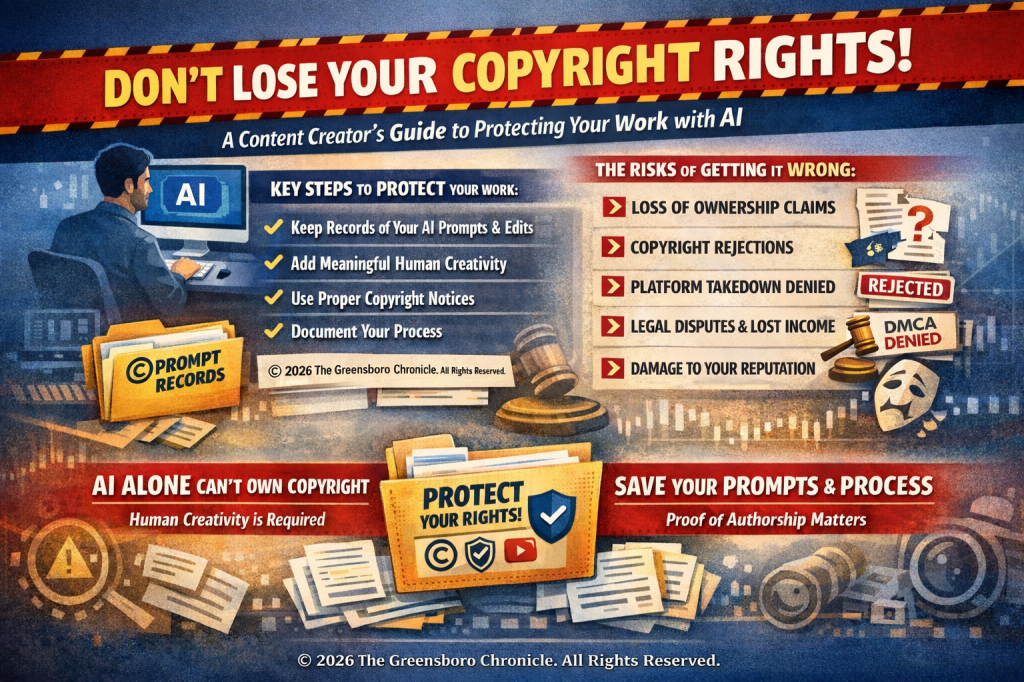
In the digital age, photos, graphics, videos, articles, and designs can be copied, reposted, altered, or stolen in seconds. Whether you’re a journalist, photographer, small business owner, artist, podcaster, or independent creator, placing a copyright statement on every original work you create is one of the simplest and most important protections you have.
Many creators assume, “Copyright is automatic, so I don’t need to say anything.”
That assumption is where problems begin.
Let’s break this down in plain language.
What a Copyright Statement Actually Does
A copyright statement usually looks like this:
© 2026 Your Name or Business Name. All Rights Reserved.
This short line does three critical things:
Publicly declares ownership It tells the world who owns the work. Puts others on legal notice No one can honestly claim they “didn’t know” the work was protected. Defines limits on use “All Rights Reserved” means no copying, reposting, editing, or selling without permission.
While U.S. law grants copyright automatically when you create something original, the copyright notice strengthens your legal position dramatically.

Why “Automatic Copyright” Is Not Enough in Real Life
Yes, copyright exists the moment you create an original work.
But enforcement is where creators get burned.
Without a visible copyright statement:
Others may claim they believed the work was “free to use” Platforms may treat the dispute as unclear or shared ownership Courts may limit damages Your credibility as the original creator can be challenged
In short: copyright without notice is weak copyright when disputes arise.
What Happens When You DON’T Use a Copyright Statement
Failing to place a copyright statement can lead to serious consequences—many of which creators don’t discover until it’s too late.
1. Your Work Gets Reused Without Credit
If there’s no copyright notice:
People repost your photos Businesses use your graphics in ads Articles get copied word-for-word
And they’ll often say:
“There was no copyright on it.”
That argument—fair or not—creates friction, delays, and lost leverage.
2. You May Lose Money You’re Legally Entitled To
If your work is stolen and monetized by someone else:
You may struggle to prove willful infringement Courts may reduce or deny statutory damages You may only recover limited compensation—or none at all
A visible copyright statement helps establish intentional misuse, which matters greatly in legal remedies.
3. Platforms May Side Against You
Social media platforms, marketplaces, and hosting services often rely on visible proof when handling takedown requests.
Without a copyright statement:
Your DMCA claim may be questioned The infringer may counter-claim ownership Content removal may be delayed or denied
This is especially damaging for journalists, activists, and small businesses relying on timely exposure.
4. Others May Register Your Work First
This is a harsh reality:
If someone copies your work and registers it before you take action, you now have a legal uphill battle to prove original ownership.
A visible copyright notice acts as a timestamped ownership marker in public view.
5. Your Brand and Authority Are Weakened
Professional creators protect their work visibly.
Failing to include a copyright statement:
Signals inexperience Encourages exploitation Undermines trust in your brand
People are far less likely to misuse work that is clearly marked and professionally presented.
What You Should Copyright—Every Time
You should place a copyright statement on all original works, including:
Photographs Social media graphics Videos and reels Articles and blog posts Investigative journalism visuals Logos and branding materials Flyers, ads, and promotional images PDFs, reports, and digital publications
If you created it, protect it.
Best Practices for Content Creators
To protect yourself properly:
Place the copyright statement directly on images when possible Include it in captions, footers, or metadata Use the current year Use your legal name or registered business name Be consistent across all platforms
Example:
© 2026 The Greensboro Chronicle. All Rights Reserved.
Consistency builds a paper trail—and credibility.
The Bottom Line
Failing to include a copyright statement doesn’t just leave your work vulnerable—it leaves you vulnerable.
A single line of text can:
Prevent theft Strengthen legal claims Preserve income Protect your reputation Save you from costly disputes later
For content creators, copyright notice is not optional—it’s essential.
If your work matters, protect it visibly.
Watch the full video on YouTube:

©️2026 The Greensboro Chronicle. All Rights Reserved.
 Greensboro Chronicle
Leave a comment