
Analysis: What the Jordan Lee Williams Case Triggers for North Carolina and National Bail Reform
Why This Case Resonates Beyond Texas
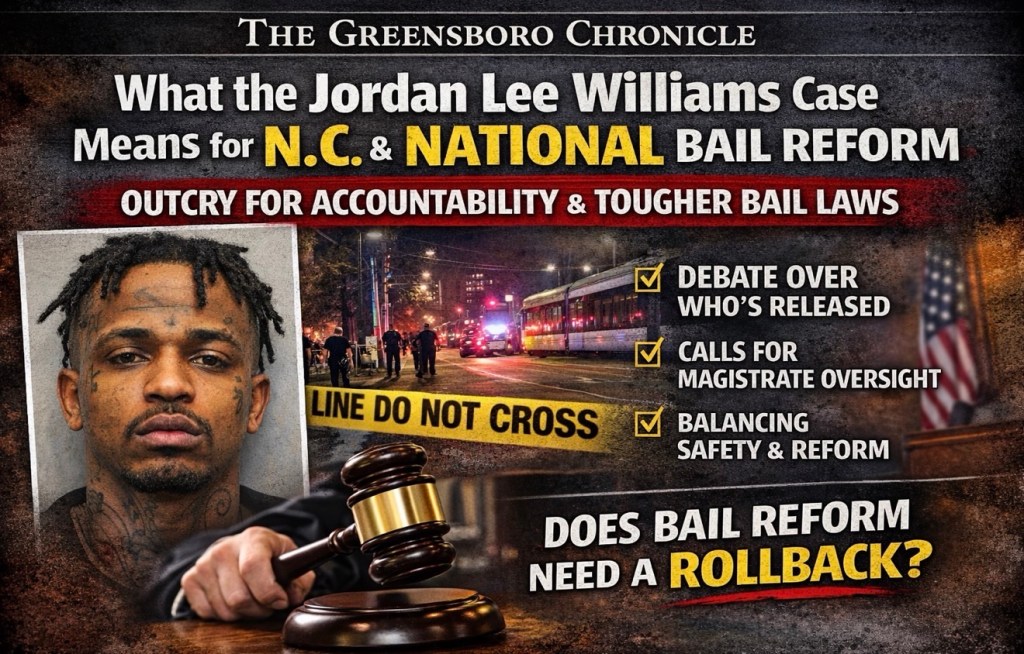
Although the fatal Houston METRORail shooting occurred in Texas, the facts surrounding Jordan Lee Williams’ release on a personal recognizance bond despite a lengthy violent criminal history immediately reverberate far beyond Harris County. The case has become a national flashpoint in the debate over bail reform, judicial discretion, and public safety — including in North Carolina, where similar policies and legal standards are already under strain.
At its core, the Williams case exposes a central tension in bail reform nationwide:
How do courts reduce unnecessary pretrial detention without releasing demonstrably dangerous individuals back into the public?
North Carolina’s Bail System: Similar Structure, Same Risks
North Carolina does not use the exact same bail framework as Texas, but the practical mechanics are strikingly similar.
Key Similarities
Magistrates, not judges, set initial bonds in most cases. Magistrates often rely on rapid assessments, incomplete criminal histories, and limited prosecutorial input. Unsecured bonds and written promises to appear are legally permitted — even for felony defendants — unless specific statutory exclusions apply.
Like Texas, North Carolina magistrates operate under time pressure and procedural efficiency, which can result in high-risk defendants being released before a full judicial review occurs.
The Williams case demonstrates the potential consequences when prior violent convictions do not outweigh reform-driven presumptions favoring release.
What This Case Triggers for North Carolina Bail Reform
1. Renewed Scrutiny of Magistrate Authority
North Carolina lawmakers and legal advocates are increasingly questioning whether magistrates should have unilateral authority to release felony defendants without secured bonds, especially when violent criminal histories are present.
The Williams case intensifies calls for:
Mandatory judicial review within 24 hours for defendants with violent felony records. Statutory limits on magistrates’ discretion in repeat violent offender cases. Clearer guidance on when unsecured bonds are prohibited, not merely discouraged.
This case strengthens arguments that risk assessment tools are insufficient when discretion overrides obvious danger signals.
2. Pressure to Redefine “Low-Risk” Defendants
Bail reform in North Carolina has relied heavily on risk-based models designed to reduce racial and economic disparities. However, the Williams case highlights a core flaw critics have long warned about:
A defendant can be “low risk” for failure to appear while still being a high risk to public safety.
North Carolina’s current framework does not always distinguish these risks effectively. Expect renewed legislative debate over:
Separating public safety risk from court-appearance risk Requiring courts to explicitly weigh violent history over reform benchmarks Revisiting whether certain offenses should automatically disqualify defendants from unsecured release
3. Accountability Demands for Judicial Actors
Although public anger often targets “judges,” the Williams case underscores a legal reality that applies equally in North Carolina:
Magistrates are rarely named publicly Bond decisions are rarely explained in writing Accountability mechanisms are minimal
In North Carolina, this case strengthens calls for:
Public disclosure of bond decisions in serious felony cases Written findings explaining why unsecured release was granted Legislative oversight of bond-setting trends by county
The public demand is no longer simply “Why was he free?” — it is “Who made the decision, and why?”
National Bail Reform: A Tipping Point Moment
The Williams case arrives at a politically volatile moment for bail reform across the United States.
National Trends Now Under Pressure
States like New York, Illinois, and California have already faced backlash after high-profile crimes committed by defendants released pretrial. Federal courts have increasingly emphasized public safety exceptions to pretrial release. Prosecutors’ associations are openly warning that ideological bail reform has outpaced safeguards.
This case adds fuel to national arguments that:
Bail reform has expanded too broadly, too quickly Violent repeat offenders are being treated as statistical anomalies rather than real threats The pendulum may be swinging back toward targeted detention and secured bonds
The Political Consequences Ahead
For Legislators
Expect renewed legislative proposals in North Carolina that:
Narrow eligibility for unsecured bonds Mandate higher scrutiny for repeat violent offenders Shift liability concerns back onto the state rather than victims
For Prosecutors
District attorneys may begin:
Objecting more aggressively at initial bond hearings Seeking immediate bond reviews Publicly opposing blanket reform measures
For Reform Advocates
The case forces reform advocates into a defensive posture, requiring them to:
Clarify that bail reform was never intended to protect violent offenders Accept tighter carve-outs for public safety Rebuild public trust eroded by cases like this
What This Case Ultimately Reveals
The Jordan Lee Williams case is not an argument against bail reform itself — it is an indictment of how reform is applied without adequate guardrails.
For North Carolina and the nation, the lesson is clear:
Equity without accountability invites tragedy Speed without scrutiny invites failure Reform without restraint invites reversal
If bail reform is to survive politically and legally, cases like this will force lawmakers to confront an uncomfortable truth:
Public safety must remain the non-negotiable floor beneath all reform efforts.
Greensboro Chronicle Insight
North Carolina is watching closely — not because this crime happened in Texas, but because the same legal mechanisms exist here. What happens next nationally will influence how North Carolina courts, lawmakers, and voters decide whether bail reform needs recalibration — or rollback.
We are now broadcasting on Spotify. Where yo can catch up on your own terms!

 Greensboro Chronicle
Leave a comment